طاقات عربية | حلول هندسية ذكية Taqat Arabiya

Author name: Taqaton_

How is thermal imaging performed (3)
Thermal Imaging

How is thermal imaging performed?

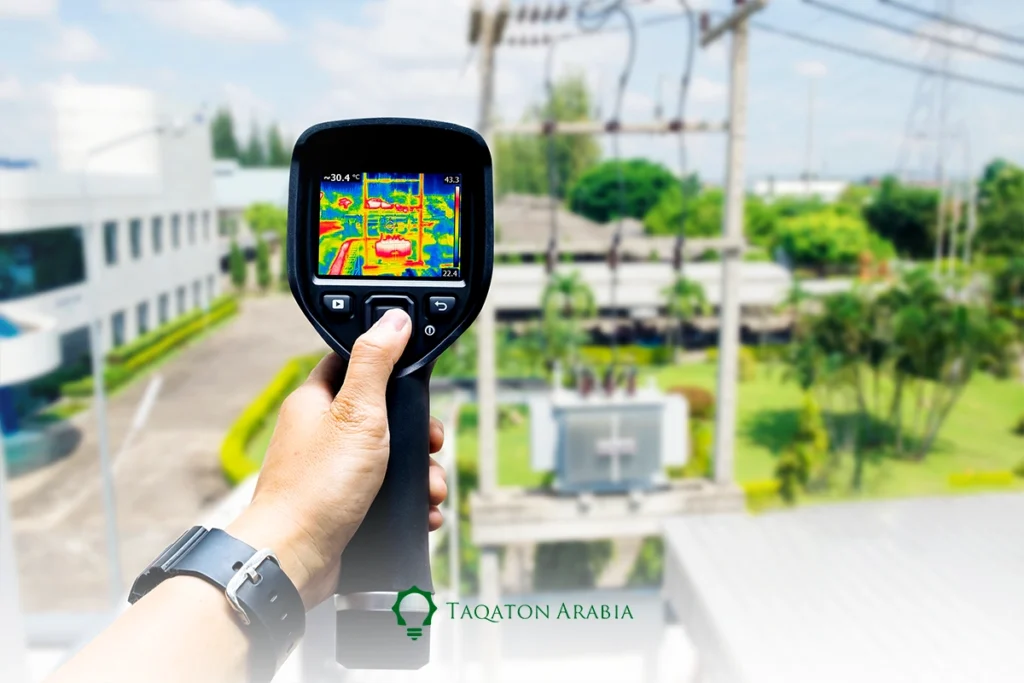
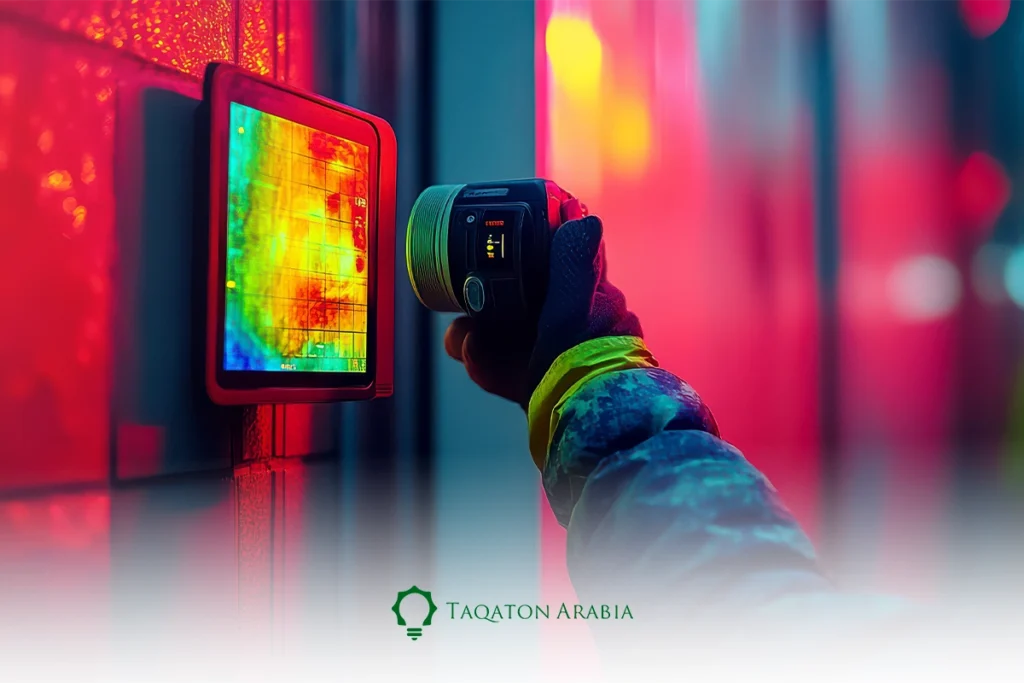
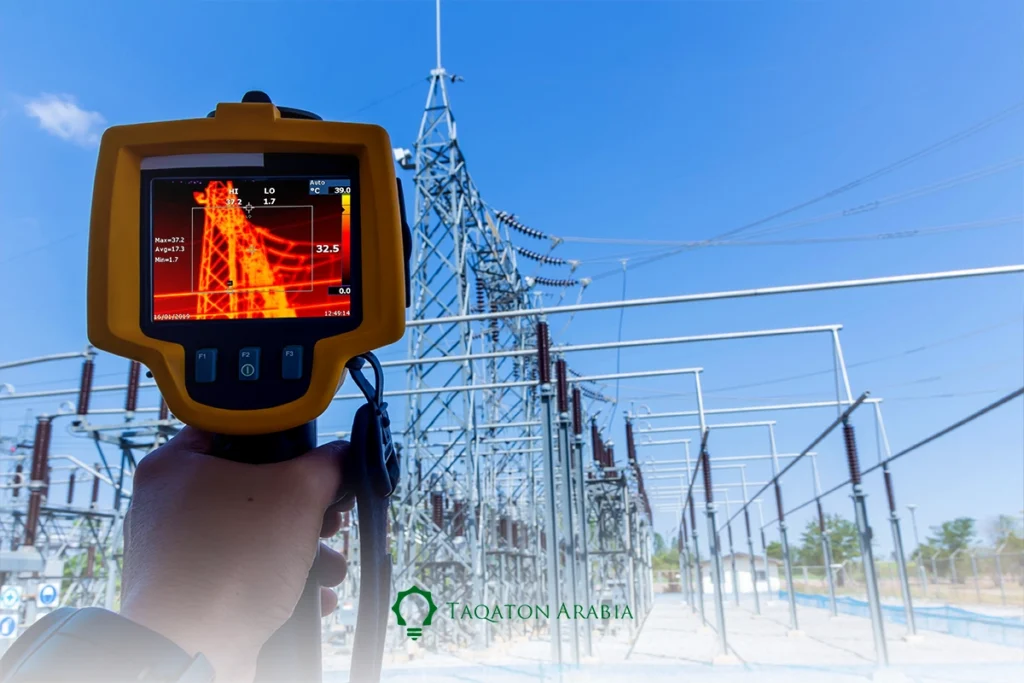
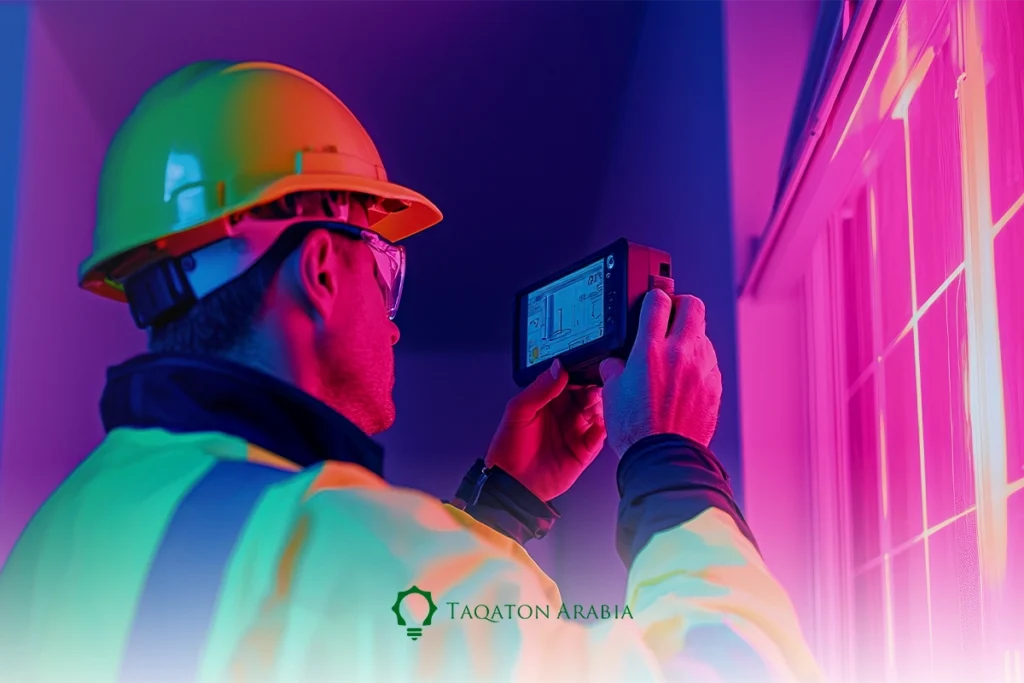
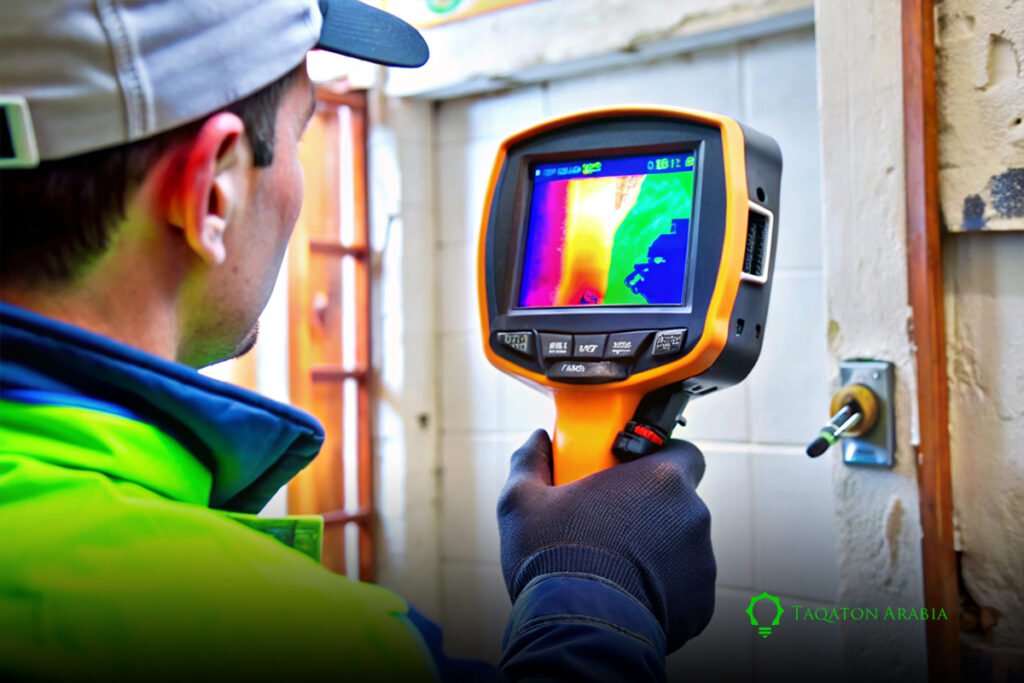
How is thermal imaging performed? Thermal imaging has become one of the most advanced and effective technologies used in modern maintenance and inspection processes. By using infrared thermal cameras, engineers and technicians can detect temperature variations that are invisible to the naked eye, allowing them to identify potential issues before they develop into serious failures. Today, thermal imaging technology is widely applied across various industries, including electrical systems, mechanical equipment, industrial facilities, and preventive maintenance inspection programs. Through infrared thermography, organizations can improve operational efficiency, enhance safety, reduce downtime, and lower maintenance costs. One of the key advantages of thermography is its ability to perform non-contact inspections while systems remain operational. This makes it an ideal solution for monitoring electrical panels, motors, transformers, and other critical equipment without interrupting daily operations. At Taqat Arabiya, we utilize the latest infrared thermal cameras and advanced thermal imaging techniques to deliver accurate diagnostics and reliable maintenance solutions that support safety, efficiency, and long-term operational sustainability. What Is Thermal Imaging Technology? Thermal imaging technology is a method of capturing and analyzing heat emitted by objects using infrared radiation. Unlike standard cameras that rely on visible light, thermal imaging cameras detect temperature differences and convert them into visible thermal images. These images allow technicians and engineers to identify abnormal heat patterns that may indicate equipment malfunctions or energy losses. Infrared thermography is commonly used in electrical maintenance, industrial inspections, building diagnostics, and preventive maintenance inspection programs. It helps detect overheating components, loose electrical connections, overloaded circuits, insulation failures, and mechanical wear before they lead to costly breakdowns. Modern infrared thermal cameras provide highly accurate temperature measurements and detailed thermal analysis, making thermal imaging an essential tool for improving system reliability, operational safety, and energy efficiency. Order the service now from Taqat Arabia website How Is Thermal Imaging Performed? Thermal imaging is performed using specialized infrared thermal cameras that capture heat emitted from equipment and surfaces. The process begins by preparing the inspection area and ensuring that systems are operating under normal conditions, as active equipment produces the temperature variations needed for accurate thermal analysis. During the inspection, technicians use thermal cameras to scan electrical panels, cables, motors, transformers, mechanical equipment, or building components. The camera detects infrared radiation and converts it into thermal images that display temperature differences using various color patterns. Areas with unusually high temperatures, often called “hot spots,” may indicate underlying issues such as overloaded circuits, loose connections, friction, or insulation problems. After capturing the thermal images, the data is analyzed to identify abnormal thermal patterns and determine the severity of potential issues. Detailed reports are then prepared, including thermal images, temperature measurements, findings, and maintenance recommendations. This process allows organizations to detect faults early, improve safety, and support predictive and preventive maintenance strategies without shutting down operations. Order the service now from Taqat Arabia website Benefits of Thermal Imaging Thermal imaging offers numerous advantages for industrial, commercial, and electrical maintenance applications. One of the main benefits is the ability to detect problems early before they become major failures, helping organizations reduce repair costs and avoid unexpected downtime. Infrared thermography also improves operational safety by identifying overheating equipment and electrical hazards that could lead to fires or system failures. Since inspections are non-contact and can be performed while systems are running, thermal imaging minimizes risks to maintenance personnel and prevents interruptions to operations. Another major benefit is improved maintenance planning. Thermal imaging supports preventive maintenance inspection programs by providing real-time condition monitoring and helping organizations schedule repairs based on actual equipment condition rather than routine intervals. Additionally, thermal imaging contributes to energy efficiency by detecting heat losses, overloaded systems, and inefficient equipment performance, enabling organizations to optimize energy consumption and reduce operational costs. Order the service now from Taqat Arabia website The Main Advantages of Thermal Imaging Cameras Infrared thermal cameras provide several important advantages that make them essential tools in modern inspection and maintenance operations. Non-Contact Inspection: Thermal cameras allow equipment inspection from a safe distance without direct contact. Real-Time Temperature Detection: They instantly identify temperature variations and overheating components. Early Fault Detection: Thermal imaging helps discover issues before they cause equipment failure or downtime. Enhanced Safety: Detects electrical and mechanical hazards while minimizing exposure to dangerous environments. Reduced Maintenance Costs: Early diagnosis prevents costly emergency repairs and extends equipment lifespan. Improved Operational Efficiency: Supports predictive maintenance strategies and minimizes unplanned shutdowns. Energy Efficiency Monitoring: Helps identify energy losses and inefficient system performance. At Taqat Arabiya, we use advanced thermal imaging technology and professional infrared thermography solutions to help businesses maintain safe, efficient, and reliable operations. Also Read: Best Certified Thermal Imaging Company in Saudi Arabia Stages of Thermal Imaging for Electrical Equipment The process of thermal imaging for electrical equipment follows several organized stages to ensure accurate results and effective fault detection. Each stage plays an important role in evaluating the condition of electrical systems and identifying potential issues before they lead to failures. 1. Preparation and Planning The inspection process begins with reviewing system information, electrical drawings, and equipment details. Technicians identify critical components that require inspection and ensure that the equipment is operating under normal load conditions for accurate thermal readings. 2. Thermal Scanning Using advanced infrared thermal cameras, technicians scan electrical panels, transformers, circuit breakers, cables, and other components. The camera captures thermal images that display temperature variations across the equipment. 3. Identifying Hot Spots During the inspection, abnormal heat patterns or “hot spots” are identified. These areas may indicate loose connections, overloaded circuits, insulation problems, phase imbalance, or equipment deterioration. 4. Thermal Image Analysis The captured thermal data is analyzed using thermography software and engineering expertise to determine the severity and possible causes of overheating. This stage helps prioritize maintenance actions based on risk levels. 5. Reporting and Recommendations A detailed report is prepared containing thermal images, temperature measurements, detected issues, and recommended corrective actions. These reports support maintenance teams in improving system reliability and operational safety. Applications of Thermal Imaging in Preventive Maintenance Thermal

Thermal Imaging for Electrical Panels (2)
Thermal Imaging

Thermal Imaging for Electrical Panels: A Comprehensive Guide

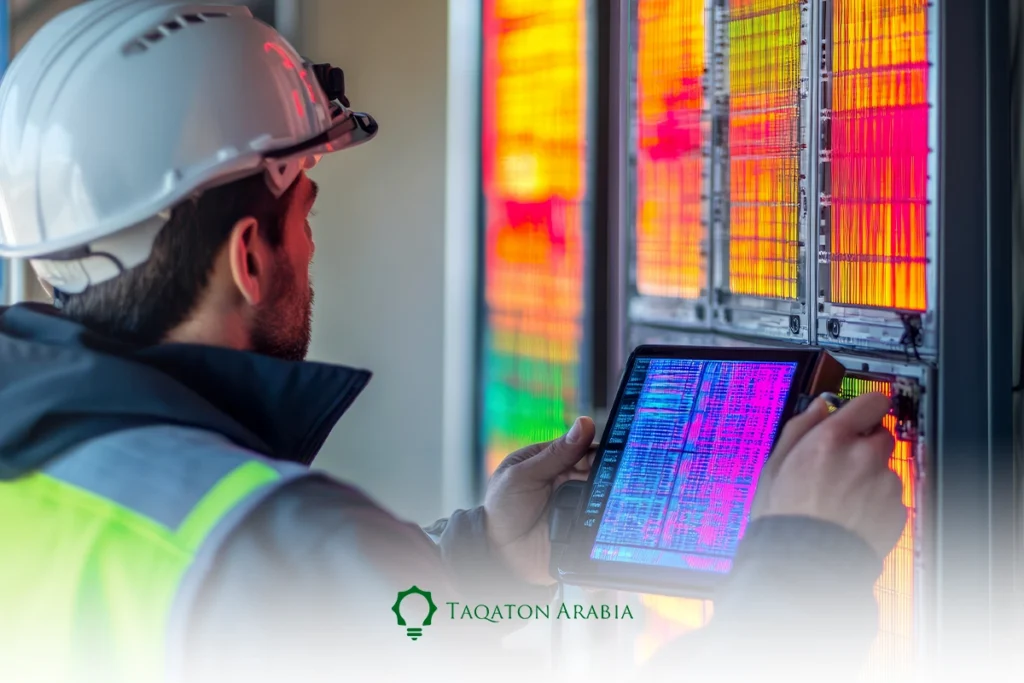
In the world of modern electrical systems, smart maintenance and early fault detection have become essential factors in ensuring operational continuity and minimizing risks. Among the most important technologies used in this field, thermal imaging stands out as an effective tool for identifying problems before they escalate. Thermal imaging of electrical panels relies on measuring temperature using infrared technology, allowing engineers and technicians to detect issues that are not visible to the naked eye—such as abnormal heat caused by overloads or loose connections. At Taqat Arabiya, we utilize the latest thermal imaging technologies to deliver accurate solutions that enhance the efficiency of electrical systems and improve operational safety. What Is Thermal Imaging of Electrical Panels? Thermal imaging of electrical panels is an inspection and analysis process that uses a thermal camera to capture thermal images showing the distribution of temperatures within electrical panels and their components. This technology relies on detecting infrared radiation emitted by objects and converting it into visible images that highlight temperature variations across different parts. This method is widely used to detect potential faults in electrical systems without the need to shut down operations. It helps identify “hot spots” that indicate underlying issues, such as: Loose or weak electrical connections Overloaded circuits Deterioration of electrical insulation Imbalance of loads between phases The importance of thermal imaging lies in the fact that it is a non-contact and safe method, allowing equipment to be inspected while in operation without exposing technicians to risk or interrupting ongoing processes. Thermal imaging cameras used for detecting electrical issues are also a key tool in preventive and predictive maintenance programs. They enable early fault detection, reducing repair costs and preventing unexpected failures that could lead to system downtime. At Taqat Arabiya, we utilize the latest thermal imaging camera technologies to deliver accurate reports that help our clients make informed decisions and achieve the highest levels of efficiency and safety in their electrical systems. Order the service now from Taqat Arabia website Importance of Thermal Imaging in Electrical Panel Inspection: Thermal imaging is considered one of the most important modern tools in the inspection and maintenance of electrical systems, thanks to its ability to detect faults early without the need to shut down operations. Its importance lies in providing a highly accurate method that enhances overall system performance while reducing operational risks. Thermal imaging plays a direct role in improving safety within facilities by identifying hot spots that could lead to fires or serious failures if not addressed in time. By measuring temperature through infrared technology, it allows continuous monitoring of electrical components without any physical contact or disruption to operations. Additionally, the use of thermal imaging cameras helps reduce maintenance costs by detecting issues at an early stage before they develop into major failures requiring expensive repairs or equipment replacement. It also improves operational efficiency by ensuring that all components are functioning within normal temperature ranges. The benefits of thermal imaging extend beyond fault detection to supporting preventive and predictive maintenance strategies. This enables organizations to achieve operational sustainability and minimize unplanned downtime. At Taqat Arabiya, thermal imaging of electrical panels is a key part of our smart engineering solutions. We utilize advanced technologies to deliver precise inspections that enhance system efficiency and ensure a safe operating environment. Order the service now from Taqat Arabia website Steps to Perform Thermal Imaging Inspection of Electrical Panels: The process of thermal imaging inspection for electrical panels follows a structured approach to ensure accurate and reliable results for proper system evaluation. Preparation and Planning The process begins with thorough preparation, including reviewing electrical panel data and identifying critical points that require detailed inspection. It is also essential to ensure that the system is operating under normal load conditions, as infrared temperature measurement depends on actual loads to reveal thermal variations. Thermal Image Capture A thermal imaging camera is used to capture images of the electrical panel and its components. Special attention is given to connections, circuit breakers, cables, and distribution points to detect any abnormal temperature rise. Data Analysis The captured thermal images are analyzed to interpret temperature patterns and identify potential causes of overheating, such as overloading, poor connections, or component failure. Reporting and Recommendations A detailed technical report is prepared, outlining inspection results, highlighting hot spots, assessing their severity, and providing practical recommendations to resolve issues and improve system performance. Maintenance Integration The findings are incorporated into preventive or predictive maintenance plans to reduce future failures and enhance long-term operational efficiency. At Taqat Arabiya, we execute every step of the thermal imaging process with precision and professionalism to deliver reliable results that support the safety and efficiency of electrical systems. Order the service now from Taqat Arabia website Factors Affecting Thermal Imaging Accuracy: The accuracy of thermal imaging results for electrical panels depends on several key factors that must be considered during the inspection process. These factors can directly impact the quality of thermal images and the accuracy of their interpretation. One of the most important factors is the nature of the surface being inspected. Different materials emit infrared radiation differently, a property known as emissivity. If emissivity is not correctly set on the thermal imaging camera, it may lead to inaccurate temperature readings. Environmental conditions also play a significant role in inspection accuracy. Ambient temperature, humidity, and airflow can all influence heat transfer, making it essential to conduct inspections under suitable conditions or account for these variables during analysis. In addition, the angle of imaging and the distance between the camera and the target object affect the clarity and accuracy of thermal images. Proper positioning ensures more reliable and precise results. Another critical factor is the electrical load during inspection. Infrared temperature measurement relies on noticeable temperature differences, so it is best to perform inspections while the electrical panels are under normal operating load to clearly detect potential issues. At Taqat Arabiya, we carefully consider all these factors during thermal imaging inspections to ensure accurate and reliable results that support informed

Solutions for Preventing Factory Failures Using Thermal Imaging
Thermal Imaging

Solutions for Preventing Factory Failures Using Thermal Imaging

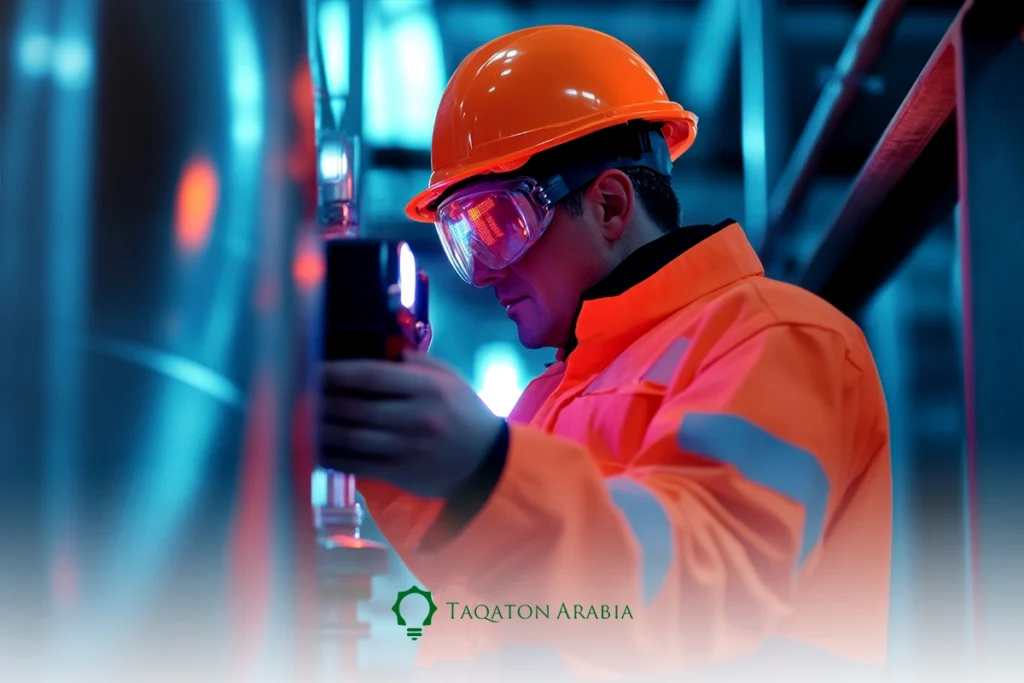
With the increasing reliance on continuous operations in factories, the need for solutions to prevent industrial failures using thermal imaging has become essential to maintain production efficiency and reduce unexpected downtime. Industrial thermal imaging relies on infrared thermal imaging solutions to detect faults early within equipment and systems without the need to stop operations. This technology is a key part of predictive and preventive maintenance strategies using thermal imaging, helping improve equipment performance and reduce repair costs. so many factories rely on an accredited thermal imaging company in Saudi Arabia, such as Taqat Arabia, to obtain high-quality thermal imaging services and carry out precise equipment inspections predictive maintenance plans for industrial systems. What is thermal imaging technology? Thermal imaging technology is one of the latest techniques used for fault detection. It relies on infrared thermal imaging solutions to detect temperature differences and convert them into visual images that accurately show the location of faults. This type of industrial thermal imaging is widely used in equipment thermal inspection inside factories, helping identify problems early before any unexpected shutdown occurs. This makes it a key element in predictive maintenance for industrial equipment and preventive maintenance using thermal imaging. That is why many facilities rely on an accredited thermal imaging company in Saudi Arabia, such as Taqat Arabia, to provide high-quality thermal imaging services within effective strategies aimed at preventing factory failures using thermal imaging. Order the service now from Taqat Arabia website How does Taqat Arabiya provide solutions to prevent factory breakdowns using thermal imaging? Taqat Arabia follows an integrated methodology to deliver solutions for preventing industrial failures using thermal imaging. This is achieved through the use of advanced infrared thermal imaging technologies within predictive and preventive maintenance plans, helping detect faults before they occur and ensuring continuous operation. How the solutions are implemented: Comprehensive factory and equipment analysis: All systems are evaluated to identify inspection points within industrial thermal imaging. Conducting equipment thermal inspection: Industrial thermal imaging is carried out using high-precision devices to detect any abnormal temperature rise. Early fault detection: Issues such as friction, overloads, or loose connections are identified before they develop into major failures. Preparing detailed technical reports: Reports are provided outlining equipment conditions along with maintenance recommendations within predictive maintenance for industrial equipment. Applying effective maintenance plans: Practical solutions are implemented based on preventive maintenance using thermal imaging to avoid future failures. Regular monitoring and continuous improvement: Periodic inspections are conducted to ensure performance stability and reduce unexpected breakdowns. Taqat Arabia, as an accredited thermal imaging company in Saudi Arabia, provides integrated solutions combining thermal imaging and predictive maintenance to ensure maximum operational efficiency. This makes it one of the leading providers of thermal imaging services in supporting factories and preventing failures before they happen. The role of Taqat Arabiya in early detection of industrial faults Taqat Arabia plays a key role in early fault detection within factories by providing solutions for preventing industrial failures using thermal imaging, through advanced infrared thermal imaging technologies. This helps maintain operational efficiency and reduce unexpected downtime. How Taqat Arabia contributes to early detection: Regular thermal inspection of equipment: Industrial thermal imaging inspections are carried out to monitor any temperature changes within systems and machinery. Implementation of predictive maintenance: It relies on predictive maintenance for industrial equipment to detect faults before they occur and take preventive actions. Accurate thermal data analysis: Advanced industrial thermal imaging techniques are used to analyze results and precisely identify sources of faults. Providing specialized technical reports: Clear reports are delivered showing equipment conditions along with recommendations within preventive maintenance plans using thermal imaging. Reducing risks and costs: Early detection helps avoid major failures and significantly reduces repair costs. Through its expertise as an accredited thermal imaging company in Saudi Arabia, Taqat Arabia provides effective solutions based on thermal imaging and predictive maintenance to ensure continuous factory operation and achieve the highest levels of safety and efficiency. Electrical panel inspection using thermal imaging with Taqat Arabiya:  Electrical panel thermal imaging is considered one of the most important steps in maintaining system efficiency inside factories. Taqat Arabia relies on the latest infrared thermal imaging solutions to deliver accurate results within industrial thermal imaging services. How the inspection is performed: Taqat Arabia carries out equipment thermal inspection using advanced thermal cameras that detect temperature variations inside electrical panels. This helps identify issues such as overloads or loose connections without the need to shut down operations. Importance of electrical panel thermal inspection: Early fault detection: It helps identify problems before they occur as part of industrial failure prevention solutions using thermal imaging. Reducing unexpected downtime: It supports continuous operation through predictive maintenance for industrial equipment. Improving electrical system efficiency: It enhances performance and reduces energy loss. Increasing facility safety: It reduces the risk of electrical fires caused by faults. Through its expertise as an accredited thermal imaging company in Saudi Arabia, Taqat Arabia provides professional thermal imaging services that help factories implement preventive maintenance using thermal imaging and ensure safe and stable operation of electrical systems. Order the service now from Taqat Arabia website Predictive maintenance using thermal imaging through Taqat Arabiya: Taqat Arabia relies on the latest infrared thermal imaging solutions to provide predictive maintenance services for industrial equipment. This is considered one of the most advanced approaches in preventing industrial failures using thermal imaging, as it enables early fault detection and effective preventive actions before breakdowns occur. How predictive maintenance using thermal imaging works: Regular equipment inspection: Periodic industrial thermal imaging is carried out to monitor any abnormal temperature changes. Thermal data analysis: Advanced industrial thermal imaging techniques are used to accurately identify fault indicators. Early problem detection: Issues such as friction, overloads, or electrical connection weaknesses are identified at an early stage. Providing detailed technical reports: Reports include clear maintenance recommendations within preventive maintenance using thermal imaging. Developing a smart maintenance plan: Decisions are based on real data to reduce failures and improve performance. Benefits of predictive maintenance using thermal imaging: Reducing unexpected breakdowns Extending

How much does electrical thermal imaging cost (2)
Thermal Imaging

How much does electrical thermal imaging cost?

Many people often ask: How much does electrical thermal imaging cost? especially with the increasing reliance on thermal imaging technology for inspecting electrical systems and detecting faults before they occur. Electrical panel thermal imaging is considered one of the most advanced solutions that uses thermal imaging techniques to detect any abnormal temperature rise with high accuracy and speed. The cost varies depending on several factors related to the inspection type, site conditions, and the equipment used, especially with the significant development in advanced thermal imaging cameras used for electrical equipment inspection. Therefore, many organizations rely on specialized companies such as Taqat Arabia to obtain accurate results and professional service in the field of thermal imaging. What is thermal imaging technology? Thermal imaging testing of electrical panels is a non-destructive inspection process that relies on infrared thermal imaging technology to detect any abnormal temperature rise inside electrical panels. This helps identify faults before they actually occur. This type of thermal imaging uses advanced thermal imaging cameras for electrical equipment inspection to detect hot spots caused by issues such as loose connections or overloads. It is considered one of the most important thermal imaging techniques used in preventive maintenance. This service is provided by an accredited thermal imaging company in Saudi Arabia, such as Taqat Arabia, where inspections are carried out with high precision to ensure the safety of electrical systems and reduce the risk of unexpected failures. Order the service now from Taqat Arabia website How much does electrical thermal imaging cost? There is no fixed price for electrical thermal imaging, as the cost varies based on a set of technical and operational factors. Pricing mainly depends on the nature of the inspection and the type of thermal imaging technology used. In general, the final cost is determined after an on-site assessment by a specialized company such as Taqat Arabia. Key factors affecting electrical thermal imaging cost: Size and number of electrical panels: The more panels or the more complex the system, the longer the inspection time and the higher the cost. Type of inspection required: Electrical panel thermal imaging differs from industrial or building inspections within thermal imaging applications. Level of fault complexity: If the issue is unclear or requires deeper analysis, the cost increases due to additional time and expertise needed. Quality of equipment used: Results depend on camera accuracy; high-sensitivity and high-resolution thermal imaging devices are generally more expensive. Technical team expertise: Experienced thermal imaging specialists provide more accurate results, which is reflected in the service cost. Project location: Transportation costs within Saudi Arabia may affect the final price. Execution speed (standard vs. urgent): Emergency or out-of-hours requests may come at a higher cost. Technical reporting: Detailed reports and professional analysis within thermal imaging services may increase the overall value of the service. Electrical thermal imaging cost is not a fixed number; it depends on several factors such as project size, device accuracy, and team expertise. Therefore, it is always recommended to contact a specialized company like Taqat Arabia to obtain an accurate evaluation tailored to inspection needs. Order the service now from Taqat Arabia website Benefits of thermal imaging: Thermal imaging is considered one of the most important modern technologies used for fault detection. It relies on infrared thermal imaging to accurately detect temperature differences, making it an effective tool across various fields, especially in electrical panel thermal imaging. Key advantages of thermal imaging: Non-destructive inspection: Faults can be detected without breaking walls or interrupting system operations. Early fault detection: It helps identify issues before they escalate, using advanced thermal imaging techniques. High accuracy in locating problems: Thermal anomalies are precisely identified using advanced thermal imaging cameras for electrical equipment inspection. Time and cost efficiency: It reduces emergency maintenance and prevents unexpected failures. Enhanced safety: It minimizes the risk of fires and serious electrical faults. Inspection during operation: No need to shut down devices or panels, especially in electrical panel thermal imaging. Versatility of applications: Used in electrical systems, buildings, mechanical systems, and various thermal imaging applications. Thermal imaging technology is a fast and effective solution for detecting faults and improving system efficiency. Therefore, it is recommended to rely on a specialized company like Taqat Arabia to achieve the best results using the latest thermal imaging technologies. Order the service now from Taqat Arabia website Thermal imaging use cases: Thermal imaging applications are highly diverse due to the continuous development of infrared thermal imaging technology. It is now widely used across security, industrial, and environmental fields, making it an essential tool relied upon by any accredited thermal imaging company in Saudi Arabia, such as Taqat Arabia. Perimeter Security: Thermal imaging is used to protect facilities and sensitive sites by detecting people and objects in darkness or harsh weather conditions, making it ideal for security surveillance systems. Early fire detection: Modern alarm systems rely on thermal imaging technology to detect abnormal temperature rises before a fire breaks out, enabling rapid response and reducing damage. Accurate temperature measurement: Infrared thermal imaging is used for precise remote temperature measurement, whether in electrical panel thermal imaging or various industrial processes. Future trends in thermal imaging: Thermal imaging technologies are continuously evolving, including the integration of artificial intelligence for faster data analysis and the use of higher-resolution cameras, increasing efficiency across different applications. These scenarios highlight the importance of thermal imaging across multiple fields—from security to industry—making it a smart investment for any organization seeking accuracy and speed in detection, especially when working with an accredited thermal imaging company in Saudi Arabia such as Taqat Arabia. Importance of thermal imaging in electrical panel inspection: Electrical panel thermal imaging is one of the most important applications of infrared thermal imaging technology, as it is used for early fault detection without the need to shut down operations. This makes it an essential tool in preventive maintenance. Many organizations rely on an accredited thermal imaging company in Saudi Arabia, such as Taqat Arabia, to ensure accurate results and system safety. Key benefits of thermal

Best Certified Thermal Imaging Company in Saudi Arabia
Thermal Imaging

Best Certified Thermal Imaging Company in Saudi Arabia

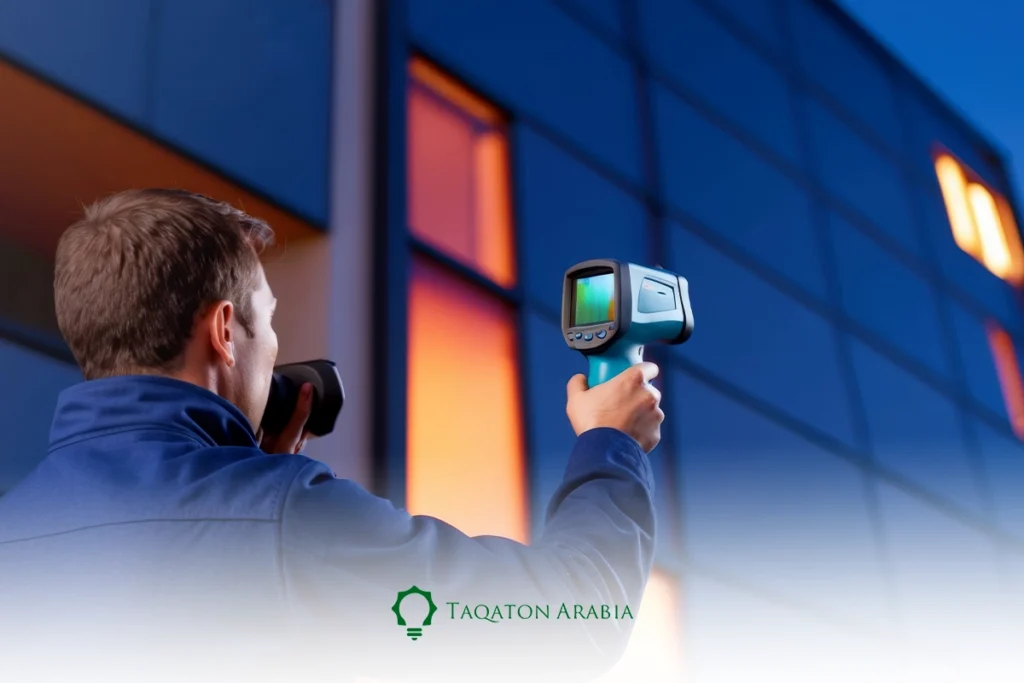
With the advancement of thermal imaging technology, relying on an accredited thermal imaging company in Saudi Arabia has become essential for detecting faults and invisible issues with high accuracy, without the need for demolition or direct intervention. Infrared thermal imaging is based on detecting temperature differences to quickly and efficiently identify problem areas. This technology is considered one of the most important modern solutions across various fields. Therefore, many people look for a reliable provider that delivers professional thermal imaging applications, such as Taqat Arabia Company, which offers advanced services that meet the highest quality standards in the Saudi market What is Thermal Imaging Testing? Where do we apply Thermal Imaging? Thermal imaging technology is one of the latest techniques used to detect hidden faults and problems. It relies on infrared thermal imaging to capture temperature differences and convert them into visual images that clearly show the location of defects with high accuracy. This technology is widely used in many thermal imaging applications such as building inspections, water leakage detection, electrical faults, and industrial systems. That is why many organizations rely on an accredited thermal imaging company in Saudi Arabia, such as Taqat Arabia, to obtain accurate and reliable results. What are the factors that affect thermal imaging? Ambient temperature: The surrounding environment affects the accuracy of thermal camera readings. Type of surface being inspected: Different materials reflect heat differently, which can influence thermal imaging results. Humidity and weather conditions: High humidity or weather factors may reduce the accuracy of infrared thermal imaging. Distance between the camera and the target: The greater the distance, the lower the sharpness and accuracy of the thermal image. Device efficiency: The quality of results depends on the accuracy and capability of the thermal imaging cameras used. Thermal imaging technology is a powerful tool for detecting invisible problems, but its accuracy depends on several important factors. Therefore, it is recommended to rely on an accredited thermal imaging company in Saudi Arabia, such as Taqat Arabia, to ensure the best results across different thermal imaging applications. Also Read: What is Short Circuit Study? Why Do Short Circuits Happen? Order the service now from Taqat Arabia website The Importance of Thermal Imaging Testing: Thermal imaging is considered one of the most important modern tools for early detection of faults inside electrical panels. Infrared thermal imaging technology works by identifying abnormal temperature increases without the need to shut down or disconnect the system. That is why many organizations rely on an accredited thermal imaging company in Saudi Arabia, such as Taqat Arabia, to ensure inspection accuracy and system safety. Key benefits of thermal imaging in electrical panels: Early fault detection: It helps identify overheating points before they develop into damage or fire hazards. Reducing unexpected failures: By detecting issues early within thermal imaging applications, system breakdowns can be prevented. Improving electrical system efficiency: It contributes to better overall performance and reduced energy loss. Inspection without shutdown: Thermal inspections can be carried out while systems are operating normally, without interruption. Increased safety: It helps protect facilities from serious electrical hazards and potential risks. Thermal imaging is an essential tool in electrical panel inspections, offering high accuracy and fast fault detection. Therefore, it is always recommended to rely on an accredited thermal imaging company in Saudi Arabia, such as Taqat Arabia, to ensure the best results using the latest infrared thermal imaging technologies. Order the service now from Taqat Arabia website Thermal Imaging Services Thermal imaging is widely used in preventive maintenance, as it helps detect faults before they occur. It relies on infrared thermal imaging technology that identifies temperature differences within various systems without any direct intervention. That is why many organizations depend on an accredited thermal imaging company in Saudi Arabia, such as Taqat Arabia, to carry out accurate and professional inspections. Key applications of thermal imaging in preventive maintenance: Electrical panel inspection: Detecting overheating points and preventing unexpected failures. Mechanical maintenance: Identifying friction or damage in motors and industrial equipment. HVAC systems inspection: Locating air leakage or reduced system performance in cooling and air conditioning systems. Water leakage and insulation detection: Identifying moisture areas or insulation loss in buildings. Industrial facility maintenance: Monitoring overall performance and reducing equipment downtime. Thermal imaging technology is an essential tool in preventive maintenance, as it reduces failures and improves operational efficiency. Therefore, it is always recommended to rely on an accredited thermal imaging company in Saudi Arabia, such as Taqat Arabia, to ensure accurate inspections and high-quality results across different thermal imaging applications. Also Read: The Importance Of Preventative Maintenance For Electric Motors Why Taqat Arabiya is the best Certified Thermal Imaging Company in Saudi Arabia?  Taqat Arabia is considered one of the leading choices for accredited thermal imaging in Saudi Arabia, thanks to its extensive experience and use of the latest infrared technologies to deliver accurate, reliable results across various applications. Key reasons for excellence: Official accreditation and professional expertise: It provides certified inspection services in thermal imaging according to the highest quality standards. Latest thermal imaging devices: Advanced equipment is used to ensure high accuracy in detecting faults. Multiple thermal imaging applications: Its services cover electrical panels, buildings, mechanical systems, and other thermal imaging applications. Specialized team: A group of experts in thermal imaging technology capable of analyzing results with high precision. Effective preventive maintenance solutions: It helps detect problems early and reduce failures before they occur. Comprehensive coverage across Saudi Arabia: Services are available in different regions to meet client needs quickly and efficiently. With its experience and advanced technologies, Taqat Arabia is an ideal choice for anyone looking for an accredited thermal imaging company in Saudi Arabia that delivers precise and professional results in infrared thermal imaging and its various applications. Order the service now from Taqat Arabia website Why do we use thermal imaging cameras to detect heat loss? Thermal imaging cameras are used to detect heat loss because they rely on infrared thermal imaging technology that accurately displays temperature differences. This helps identify areas of energy

A Guide to Steam Trap Testing
Uncategorized

A Guide to Steam Trap Testing

Efficient steam systems are the backbone of many industrial operations, and steam traps are key components in maintaining their performance. Steam trap testing is a critical procedure that ensures these traps are functioning correctly,discharging condensate while preventing unnecessary steam loss. Regular testing not only optimizes energy efficiency and reduces operational costs, but also helps identify potential issues before they escalate, safeguarding the reliability and longevity of the entire system. What is a Steam Trap? A steam trap is a device used in steam systems to remove condensate (water) and non-condensable gases without letting live steam escape. Its main purpose is to maintain system efficiency, prevent water hammer, and ensure proper heat transfer in steam-operated equipment. Why are Steam Traps Testing Required? Steam trap testing is required to ensure that steam traps are working efficiently and effectively. Over time, traps can fail either by leaking live steam or by becoming blocked, leading to energy loss, reduced system performance, higher operating costs, and potential equipment damage. Regular testing helps detect faulty traps early, optimize energy usage, and maintain the overall reliability of the steam system. Types of steam Traps: Steam traps come in several types, each designed for different applications and operating conditions, and understanding the different types of steam traps is essential for selecting the right one: -Mechanical Steam Traps : Operate using a moving part (like a float or a lever) to discharge condensate. Examples: Float and Thermostatic (F&T) traps, Inverted Bucket traps. -Thermostatic Steam Traps : Open or close based on temperature differences between steam and condensate. Examples: Bimetallic traps, Liquid expansion traps. – Thermodynamic Steam Traps : Use the dynamic effect of steam and condensate flow to operate. Example: Disc traps. Each type has its advantages and limitations, and the choice depends on the system pressure, condensate load, and application requirements. Order the service now from Taqat Arabia website How to monitor steam traps? Monitoring steam traps ensures they are functioning properly and prevents energy loss. Common methods include: -Temperature Measurement : Using infrared thermometers to check the temperature difference between the inlet and outlet of the trap. -Ultrasonic Testing : Detecting the sound of steam or condensate flow to identify trap operation. -Visual Inspection : Observing the trap’s discharge if it has a sight glass or drain indicator. -Automated Monitoring Systems : Using sensors and digital systems for continuous, real-time monitoring. Regular monitoring helps identify failed traps early, optimize energy efficiency, and maintain system reliability. Also Read: what are ASHRAE Level 1, 2 & 3 Energy Audits ? What are the consequences of steam trap failures? Failure of steam traps can lead to several serious issues in a steam system: -Energy Loss : Live steam may escape, increasing fuel consumption and costs. -Reduced Efficiency :  Condensate buildup can decrease heat transfer and system performance. -Equipment Damage : Water hammer or corrosion from trapped condensate can harm pipes and machinery. -Production Downtime : Malfunctioning traps can disrupt processes and reduce productivity. -Higher Maintenance Costs : Unattended failures may require expensive repairs or replacements. Regular testing and maintenance are crucial to prevent these problems and keep the system safe and efficient. Also Read: What is Short Circuit Study? Why Do Short Circuits Happen? Why should you choose Taqat Arabiya to do Steam Trap Testing? When it comes to maintaining an efficient steam system, choosing the right partner for steam trap testing is crucial. TAQA Arabia stands out as a trusted provider with the expertise and resources to ensure your system runs safely and efficiently. Here’s why you should choose them: Trusted Expertise: Decades of experience in industrial energy services. Comprehensive Energy Solutions: Expertise in power generation, gas distribution, water solutions, and industrial systems. Reliable Testing: Ensures accurate and professional steam trap testing. Energy Efficiency: Helps reduce energy loss and optimize system performance. Operational Safety: Detects issues early to prevent equipment damage and downtime. Also Read: What is the Annual Maintenance for Transformer? Order the service now from Taqat Arabia website Other Services Provided by Taqaton Arabia for Intelligent Engineering Solutions Taqaton Arabia for Intelligent Engineering Solutions offers a wide range of advanced technical services designed to enhance operational efficiency, improve safety, and reduce energy consumption across industrial and commercial sectors. These services are categorized as follows: -Condition Monitoring Services (TI) Taqaton Arabia provides comprehensive condition monitoring solutions to ensure the reliability and performance of equipment. These include: Predictive Maintenance Preventive Maintenance Condition Monitoring Thermal Imaging Thermography These services help detect potential failures early, minimize downtime, and extend equipment lifespan. -Ultrasonic Testing & Inspection (UT) Using advanced ultrasonic technologies, the company delivers: Ultrasonic Predictive Maintenance Compressed Air Leakage Detection Air Leak Survey Partial Discharge Detection Medical Gases Survey & Testing Steam Trap Assessment Valve Inspection Ultrasonic Electrical Inspection Condition-Based Lubrication Bearing Condition Monitoring These services improve system efficiency, ensure safety, and reduce energy losses. -Energy Audit Services Taqaton Arabia conducts detailed energy assessments to optimize consumption and reduce costs: Energy Audit Energy Efficiency Analysis Energy Saving Solutions ASHRAE Level 1, 2 & 3 Energy Audits ESCO Services Energy Audit Level I, II, III Lighting Assessment HVAC Energy Saving These audits help organizations identify inefficiencies and implement sustainable energy strategies. -Power Systems Services The company provides in-depth analysis and maintenance of electrical systems, including: Power Systems Study Power Quality Analysis Harmonics Analysis Power Logging Power Factor Correction Arc Flash Analysis Short Circuit Study Electrical Safety Audit Electrical Installation Audit Annual Maintenance for Transformers Annual Maintenance for Switchgear General Electrical Maintenance These services ensure safe, reliable, and optimized electrical operations. Order the service now from Taqat Arabia website -Solar & Renewable Energy Solutions (PV Systems) Taqaton Arabia supports clean energy adoption through: Solar Water Heater Systems Solar PV Systems Solar Heat Pump Renewable Energy Solutions Solar PV Cleaning Solar PV Monitoring Solar Systems for Hotels Flat Plate Solar Water Heaters These solutions help reduce dependence on conventional energy sources and support sustainability goals. Through these diverse services, Taqaton Arabia demonstrates its commitment to innovation, efficiency, and sustainability, making it a trusted

What is Short Circuit Study Why Do Short Circuits Happen (3)
Short Circuit Study

What is Short Circuit Study? Why Do Short Circuits Happen?

Electricity powers our homes and devices every day, but sometimes it can take a dangerous shortcut. This is called a short circuit. It happens when electricity flows along an unintended path with very low resistance, bypassing the normal route through appliances or wiring. The sudden surge of current can damage devices, create sparks, or even start fires. Short circuits usually occur because of damaged wires, faulty insulation, loose connections, or contact with water, essentially anything that allows electricity to “cheat” its normal path. Understanding how and why they happen is the first step to keeping your electrical systems safe. At Taqat Arabiya, we help you understand these risks and provide solutions to protect your electrical systems, ensuring safety and reliability in every home and business. What is Short Circuit? Why Do Short Circuits Happen? A SHORT CIRCUIT is an abnormal connection in an electrical circuit that allows current to flow along an unintended path, often bypassing the designed load. This sudden surge of current can cause excessive heat, damage electrical components, or even start a fire if not properly protected. Short circuits happen for several reasons, such as damaged insulation on wires, loose or exposed connections, faulty devices, or contact between conductive parts that shouldn’t touch. They can also occur due to moisture, corrosion, or even physical damage to the circuit. Essentially, any situation that creates an unintended low-resistance path can trigger a short circuit. Why is short circuit important in power system? Understanding short circuits is extremely important in a power system because a SHORT CIRCUIT STUDY helps engineers assess the safety, reliability, and efficiency of electrical networks. Short circuits can cause massive current surges that damage equipment, trigger outages, and even create fire hazards. By conducting a SHORT CIRCUIT STUDY, engineers can analyze potential short circuit scenarios and design protective devices like circuit breakers and relays to quickly isolate faults, minimizing damage and maintaining system stability. These calculations are performed in accordance with IEC 60909, the international standard for short circuit current calculation in power systems, ensuring accurate and reliable results. In short, performing a SHORT CIRCUIT STUDY allows power systems to operate safely and reliably, protecting both equipment and people while ensuring the network remains stable under fault conditions. Also Read: What Is an Arc Flash Study and Why Your Facility Needs One ? Order the service now from Taqat Arabia website Types of Short Circuits: In electrical systems, short circuits can occur in several different ways, depending on which parts of the circuit come into contact. The main types of short circuits are: Line-to-Line (Phase-to-Phase) Short Circuit – This happens when two live wires of different phases touch each other, causing a high current flow between them. Line-to-Ground (Phase-to-Ground) Short Circuit – This occurs when a live wire comes into contact with the ground or grounded equipment, creating a dangerous current path. Double Line-to-Ground Short Circuit – In this type, two live wires touch the ground simultaneously, combining the effects of line-to-line and line-to-ground faults. Three-Phase Short Circuit – All three live wires (phases) come into contact, either directly or through the ground. This is the most severe type and can produce the highest current surge in the system. Each type has unique characteristics and consequences, and power system engineers must consider them when designing protection schemes to keep the system safe and stable. Also Read: How Can You Detect Compressed Air Leaks with Taqat Arabiya? Why Short Circuit is Dangerous? Short circuits are dangerous because a SHORT CIRCUIT STUDY shows how uncontrolled surges of electrical current can damage equipment, start fires, and even cause injuries or fatalities. The sudden high current generates intense heat, which can melt wires, damage insulation, and ignite nearby materials. Beyond physical damage, conducting a SHORT CIRCUIT STUDY helps engineers understand how short circuits can disrupt the stability of power systems, leading to blackouts or equipment failure. That’s why protective devices like fuses, circuit breakers, and relays are essential—they detect short circuits and isolate the faulty section before severe damage occurs. In short, performing a SHORT CIRCUIT STUDY highlights that a short circuit is not just a technical fault; it’s a serious safety hazard that can affect both people and property. Order the service now from Taqat Arabia website How to Prevent Short Circuits Preventing short circuits is essential to keep electrical systems safe and reliable. Some key ways to prevent short circuits include: Proper Insulation – Ensure all wires and cables have high-quality insulation and are free from damage or wear. Regular Maintenance – Inspect electrical equipment, connections, and wiring periodically to detect loose or corroded parts. Avoid Overloading Circuits – Do not connect more devices than a circuit can safely handle, as overloading increases the risk of faults. Use Protective Devices – Install fuses, circuit breakers, and surge protectors to automatically cut off power if a short circuit occurs. Keep Electrical Systems Dry and Clean – Moisture, dust, and corrosion can create unintended paths for electricity, increasing short circuit risk. Professional Installation – Always rely on qualified electricians for wiring and repairs to ensure correct connections and grounding. By following these precautions, you can significantly reduce the risk of short circuits, protecting both equipment and people. Order the service now from Taqat Arabia website

What Is an Arc Flash Study and Why Your Facility Needs One (2)
Arc Flash Study

What Is an Arc Flash Study and Why Your Facility Needs One ?

In industrial environments and electrical power systems, operational safety is an essential element to ensure work continuity and the protection of individuals and equipment. Among the electrical hazards that may threaten operational efficiency and facility safety, Arc Flash stands out as one of the most dangerous phenomena that can lead to severe equipment damage or serious injuries to workers. Hence, the importance of an Arc Flash study emerges as a fundamental step to: Evaluate potential electrical risks. Analyze their impact on operational systems. Take appropriate preventive measures to mitigate their hazards. At Taqat Arabia, we believe that conducting an Arc Flash study is not merely about complying with safety requirements; it represents a strategic investment to protect human and material assets within industrial and commercial facilities. What is an Arc Flash? Arc Flash is a dangerous electrical phenomenon that occurs due to a sudden discharge of electrical energy between two or more conductors. This happens as a result of a fault or defect in the insulation system, or due to unintentional contact between current-carrying parts. This discharge generates massive thermal energy in a very short period, with temperatures that may reach thousands of degrees Celsius, leading to: Melting of metals inside electrical equipment. Generation of powerful pressure waves that may cause device damage. Emission of intense light and high heat that can cause serious burns to workers. Outbreak of fires or explosions in electrical systems. The Arc Flash phenomenon often occurs inside electrical distribution boards, during maintenance work, or as a result of equipment failure. This makes an Arc Flash study essential to determine the risk level and take appropriate preventive measures. By conducting an Arc Flash study, it is possible to: Analyze the probability of this phenomenon occurring. Determine safe distances for workers. Select appropriate Personal Protective Equipment (PPE). Reduce the risks of electrical accidents within facilities. Also Read: The Importance Of Preventative Maintenance For Electric Motors Order the service now from Taqat Arabia website What Is an Arc Flash Study? An Arc Flash Study is a detailed engineering analysis conducted to evaluate the risk of arc flash hazards within an electrical power system. An arc flash is a dangerous electrical explosion caused by a short circuit or equipment failure, which can generate extremely high temperatures, intense pressure waves, and molten metal fragments within milliseconds. The purpose of an arc flash study is to determine the potential incident energy levels at various points in an electrical system and to define the appropriate safety boundaries and required personal protective equipment (PPE). The study involves analyzing system components such as switchgear, transformers, circuit breakers, and distribution panels. Arc flash calculations are typically performed in accordance with IEEE 1584, the internationally recognized standard for incident energy analysis and arc flash hazard assessment. By performing an arc flash study, organizations can identify hazardous areas, implement proper labeling, and establish safety procedures that reduce the risk of injuries, equipment damage, and operational downtime. Why Is an Arc Flash Study Important? An arc flash study is critical for protecting personnel, ensuring regulatory compliance, and maintaining operational reliability. Electrical arc flash incidents can result in severe injuries, fatalities, significant equipment damage, and costly downtime. Key reasons why an arc flash study is important include: Employee Safety: It helps determine safe working distances and appropriate PPE requirements for maintenance staff and electricians. Regulatory Compliance: Many safety standards require arc flash risk assessments and proper equipment labeling. This study helps ensure compliance with NFPA 70E, which defines electrical safety requirements and safe work practices. Risk Reduction: Identifies system weaknesses and recommends corrective actions such as coordination adjustments or equipment upgrades. Operational Continuity: Minimizes unexpected failures and downtime caused by electrical faults. Financial Protection: Reduces liability risks and potential legal costs associated with workplace accidents. Conducting a professional arc flash study ensures that electrical systems are not only efficient but also safe and compliant with industry standards. Arc Flash Study Requirements: Conducting an effective arc flash study requires accurate data, proper system modeling, and compliance with recognized safety standards. The main requirements typically include: Up-to-Date Electrical Single-Line Diagrams: Accurate documentation of the electrical distribution system. Equipment Data Collection: Detailed information about transformers, cables, breakers, protective devices, and panel boards. Short-Circuit Analysis: Calculation of available fault current at different system points. These calculations are performed in accordance with IEC 60909, the international standard for short circuit current calculation. Short circuit analysis is a critical input for arc flash calculations, as fault current levels directly impact incident energy results. Protective Device Coordination Study: Ensuring protective devices operate correctly to minimize incident energy. Incident Energy Calculations: Determining the arc flash boundary and required PPE levels. The selection of Personal Protective Equipment (PPE) follows IEC 61482 standards, which define protective performance requirements against arc thermal hazards. Proper Equipment Labeling: Installing warning labels that indicate hazard levels and safety requirements. Regular updates of the arc flash study are necessary whenever system modifications, expansions, or equipment replacements occur. Also Read: How Can You Detect Compressed Air Leaks with Taqat Arabiya? Order the service now from Taqat Arabia website What to Expect from Taqat Arabiya’s Arc Flash Study Process At Taqat Arabiya, our Arc Flash Study process is designed to ensure maximum electrical safety, regulatory compliance, and operational reliability. We follow a structured, engineering-based approach to deliver accurate results and practical recommendations tailored to each facility’s needs. Initial Consultation and Scope Definition We begin by understanding the facility’s electrical infrastructure, operational requirements, and project objectives. The scope of work is clearly defined to ensure all critical system components are included in the study. Detailed Data Collection Our engineering team conducts a comprehensive site survey to collect accurate data, including single-line diagrams, equipment ratings, protective device settings, cable specifications, and transformer details. Accurate data collection is essential for reliable arc flash calculations. System Modeling and Analysis Using advanced engineering software, we perform: Short-circuit analysis Protective device coordination study Arc flash incident energy calculations This step determines fault current levels, arc flash boundaries, and required personal protective

The Importance Of Preventative Maintenance For Electric Motors (3)
Preventive Maintinance, Uncategorized

What is Preventive Maintenance?

In Taqat Arabia, we always say that preventive maintenance is one of the most important pillars in managing modern industrial assets It is a methodology that relies on periodic inspection and pre-planned maintenance to maintain equipment efficiency and prevent malfunctions before they occur. Instead of waiting for a problem, preventative maintenance anticipates it with simple but effective actions such as cleaning, lubrication, calibrating critical components, and reviewing system performance. In short, Preventive maintenance is the first step toward safer, more reliable, and more sustainable operation. What Is Preventive Maintenance ? Preventive maintenance is a proactive approach to asset management designed to preserve equipment performance and prevent unexpected failures through scheduled inspections and planned maintenance activities. This methodology relies on predefined time intervals or operating hours during which cleaning, lubrication, component replacement, and system checks are performed to keep equipment in optimal condition. The main goal is to prevent breakdowns before they occur while balancing operational efficiency with maintenance cost. In modern industrial environments, preventive maintenance represents a strategic shift from reactive to proactive maintenance — extending asset lifespan, minimizing downtime, and improving system reliability through structured, performance-based planning. In essence, preventive maintenance is not just routine work — it’s an operational strategy that drives consistency, safety, and efficiency across every process. The Importance of Preventive Maintenance and Its Key Benefits In today’s fast-evolving industrial landscape, preventive maintenance is a cornerstone of operational stability and performance reliability. It doesn’t merely prevent breakdowns — it protects your operational investments from costly downtime and production losses. Implementing structured and consistent maintenance programs enables you to: Ensure continuous operations by reducing unexpected failures and maximizing equipment availability. Lower long-term costs by minimizing emergency repairs and unplanned replacements. Extend asset lifespan through consistent care and early issue detection. Improve product quality by maintaining optimal equipment performance. Enhance workplace safety through early identification of potential risks. Boost operational efficiency with better scheduling and reduced downtime. At Taqaton Arabia, preventive maintenance is not a routine task — it’s part of an integrated engineering framework that drives reliability, sustainability, and excellence across every operation. Regular preventive maintenance isn’t an expense — it’s an investment in stability, safety, and long-term performance Order the service now from Taqat Arabia website Objectives of Preventive Maintenance: Preventive maintenance aims to achieve strategic objectives that ensure long-term operational stability, safety, and efficiency across industrial facilities. It’s a fundamental pillar of smart asset management, connecting operational excellence with sustainable productivity. Key objectives include: Ensuring operational continuity by maintaining equipment in optimal condition and preventing sudden breakdowns. Enhancing performance and productivity through precise calibration and improved system readiness. Reducing operational costs by minimizing emergency repairs and optimizing component replacement timing. Improving workplace safety through early detection of potential hazards and failures. Extending equipment lifespan via consistent monitoring and maintenance practices. Strengthening reliability by maintaining accurate performance data that supports smarter decision-making. At Taqat Arabia, preventive maintenance is seen as a long-term engineering investment — combining technology, analysis, and intelligent planning to ensure safer, more efficient, and more resilient operations.   Industries That Use Preventive Maintenance — and Key Examples: Preventive maintenance plays a vital role across industries where reliability, uptime, and performance precision are mission-critical. It’s not just about maintaining machines — it’s about protecting productivity, reducing costs, and sustaining efficiency across every operation. Leading industries implementing preventive maintenance include: Energy and Utilities: maintaining power generation units, transformers, and solar energy systems for consistent output. Manufacturing: ensuring continuous operation in sectors like petrochemicals, metals, and food processing. Heavy Industry: covering mechanical plants, rotating equipment, and lifting systems. Healthcare: performing routine maintenance on medical devices, HVAC systems, and critical power units. Smart Buildings and Infrastructure: maintaining HVAC, lighting, fire pumps, and electrical systems for reliability and safety. Transportation and Logistics: monitoring vehicles, fleets, and industrial equipment to prevent breakdowns and ensure safety. Across all sectors, preventive maintenance stands as an investment in reliability, safety, and sustainable performance — The foundation of every efficient, future-ready operation. & This is our goal from the first moment in Taqat Arabia. Also Read: What is predictive maintenance (PdM) ?  Types of Preventive Maintenance: Preventive maintenance can take several forms depending on the facility’s operational model, asset criticality, and maintenance strategy. All types share a common goal — ensuring equipment reliability and minimizing unexpected failures. The four main types include: Periodic Maintenance: Performed at predefined time intervals or operating hours to maintain performance consistency through cleaning, lubrication, and visual inspections. Condition-Based Maintenance: Maintenance actions are triggered by real-time condition monitoring and sensor data, allowing teams to act only when specific thresholds are reached. Predictive Maintenance: An advanced approach using data analytics, AI, and diagnostic tools (such as ultrasound and thermal imaging) to predict and prevent failures before they occur. Planned Maintenance: Focuses on strategic scheduling and resource allocation, ensuring maintenance tasks are efficiently executed without disrupting production. At Taqat Arabia, we integrate all types of preventive maintenance within a unified framework — empowering industries with smarter, more efficient, and cost-effective operations. Order the service now from Taqat Arabia website Steps to Build a Preventive Maintenance Program with Taqaton Arabia: At Taqat Arabia, we believe that the success of any preventive maintenance program relies not only on tools, but on a structured, data-driven methodology designed to enhance performance and extend asset life. Key Steps to an Effective Preventive Maintenance Program: Comprehensive Equipment Assessment Our engineering team analyzes the current condition, performance trends, and criticality of each asset to establish a reliable maintenance baseline. Prioritization and Scheduling Equipment is ranked by operational importance, and a precise maintenance schedule is developed to balance productivity with preventive actions. Selection of Monitoring & Diagnostic Tools Using advanced Condition Monitoring, Thermal Imaging, and Ultrasonic Testing, we track performance in real-time to detect issues before they escalate. Execution with Certified Expertise Maintenance tasks are performed by certified engineers following international standards for quality, safety, and reliability. Continuous Analysis and Optimization Post-maintenance data is reviewed to identify improvement areas, refine plans, and enhance long-term efficiency. With Taqat Arabia,

The Importance Of Preventative Maintenance For Electric Motors (3)
Preventive Maintinance

The Importance Of Preventative Maintenance For Electric Motors

The Importance Of Preventative Maintenance For Electric Motors lies in ensuring consistent performance, extending equipment lifespan, and reducing the risk of unexpected breakdowns that can result in costly downtime and operational losses. Electric motors play a crucial role in powering industrial and commercial operations, and neglecting their maintenance can directly affect productivity, safety, and overall system reliability. By implementing a structured preventative maintenance plan, potential issues can be detected early, energy efficiency can be improved, and long-term repair and replacement costs can be significantly reduced. In this article, we explore why preventative maintenance is essential for electric motors, the different maintenance strategies available, and the best practices to maintain peak performance and operational efficiency. What Is Preventive Maintenance? Preventive maintenance is a set of planned procedures that are carried out periodically with the aim of maintaining equipment efficiency and preventing failures before they occur. This type of maintenance relies on regular inspection, cleaning, lubrication, and the proactive replacement of parts that are subject to wear, instead of waiting for a failure to happen. In the context of preventive maintenance for electric generator bearings, these procedures help reduce friction, prevent temperature rise, and ensure smooth generator operation for longer periods. A well-designed preventive maintenance plan also helps improve operational performance, reduce unexpected downtime, and lower maintenance costs in the long term, which is emphasized by best practices adopted by specialized entities such as Taqat Arabiya. Order the service now from Taqat Arabia website Main Types of Preventive Maintenance Preventive maintenance is divided into several main types, which are selected according to the nature of the equipment and operating conditions. All of these types aim to reduce failures and improve performance. The most prominent types of preventive maintenance include the following: Scheduled Maintenance: This is carried out according to a specific timetable that includes regular inspection, cleaning, and lubrication. It is considered essential in the preventive maintenance of electric generator bearings to maintain motion stability and reduce wear. Condition-Based Maintenance: This type relies on monitoring the condition of the equipment, such as vibrations and temperatures, which helps in detecting problems early before they develop into major failures. Predictive Maintenance: It uses operating data and technical analysis to predict potential failures, contributing to a more accurate preventive maintenance plan and reducing downtime. Selecting the appropriate type of maintenance ensures efficient generator operation, extends the lifespan of the bearings, and achieves optimal operational performance in line with the standards adopted by Taqat Arabiya. Also Read: How Can You Detect Compressed Air Leaks with Taqat Arabiya? Order the service now from Taqat Arabia website The Importance Of Preventative Maintenance For Electric Motors Preventive maintenance of electric generator bearings is considered a fundamental element in maintaining operational efficiency and ensuring continuous generator operation without sudden failures. Bearings are among the components most exposed to wear due to continuous friction, and neglecting their maintenance may lead to damage to other parts inside the generator. Preventive maintenance contributes to reducing failure rates, lowering temperatures and vibrations, and improving the overall performance of the generator. Regular implementation of a preventive maintenance plan also helps extend the service life of the bearings and reduce repair and replacement costs. Through periodic inspection and proper lubrication, more stable and efficient operation can be achieved, which is the approach adopted by specialized entities such as Taqat Arabiya to ensure the highest levels of safety and efficiency in operating electric generators. How Is Preventive Maintenance Implemented? Preventive maintenance is implemented through a set of organized steps aimed at maintaining equipment efficiency and preventing failures before they occur. The process begins with developing a preventive maintenance plan that includes clear schedules for inspection and follow-up. Implementation steps include periodic inspection of the bearings, monitoring vibration levels and temperatures, ensuring proper lubrication, and cleaning parts exposed to dust and impurities. In the case of preventive maintenance for electric generator bearings, the focus is on early detection of any wear or defects in the bearings to avoid damage to the generator. It is also recommended to regularly document inspection and maintenance results, which helps improve operational performance and make accurate, timely decisions. This is the approach relied upon by specialized institutions such as Taqat Arabiya to ensure the safe and stable operation of electric generators. Order the service now from Taqat Arabia website Why Is Taqat Arabia the Best Provider of Preventive Maintenance Services for Electric Generator Bearings? Taqat Arabia stands out as one of the leading companies in providing preventive maintenance services for electric generator bearings with a high level of professionalism and advanced quality standards. The company relies on trained and specialized technical teams in the maintenance of heavy equipment and generators, ensuring accurate and professional implementation of preventive maintenance plans. The main reasons for preferring Taqat Arabia include: Extensive Technical Expertise: A specialized team capable of handling all types of bearings and identifying potential faults at an early stage. Highest Quality Standards: The use of advanced tools and equipment for inspection and execution, ensuring continuous operation and avoiding sudden failures. Regular and Well-Planned Maintenance Execution: With clear schedules for periodic inspection and continuous monitoring of bearing performance. Application of Best Global Practices: Adopting modern preventive maintenance methods that reduce wear and extend the generator’s service life. Accurate Process Documentation: Providing detailed reports for maintenance cycles that help improve operational performance and plan future maintenance. Thanks to these advantages, Taqat Arabia has become the optimal choice for anyone seeking preventive maintenance services for electric generator bearings with high quality and guaranteed results. Also Read: what are ASHRAE Level 1, 2 & 3 Energy Audits ? Order the service now from Taqat Arabia website Common Mechanical Problems and How Preventive Maintenance Can Address Them Electric generator bearings are exposed to several common mechanical problems as a result of continuous operation or neglect of maintenance, which can directly affect generator efficiency and service life. The most prominent of these problems include: Increased Vibrations: These are often caused by bearing wear or poor lubrication and can be

Scroll to Top