
Electrical systems operate continuously under varying loads, making early detection of abnormal conditions essential for maintaining safety, reliability, and operational continuity. Electrical thermal inspection provides a practical way to identify unusual temperature patterns that may indicate developing faults before they turn into major failures.
Unlike conventional visual inspections, electrical thermal imaging allows engineers to detect heat variations across electrical components without direct contact. This makes it useful for inspecting electrical panels, transformers, cables, and other critical equipment while supporting preventive and predictive maintenance programs.
The importance of electrical thermal imaging goes beyond simply finding hot spots. When performed correctly, it provides valuable condition-based information that helps maintenance teams prioritize repairs, reduce unexpected downtime, protect equipment, and improve overall electrical safety.
In this guide, we explore how thermal inspection works, its major applications, the factors that affect its accuracy, and the role it plays in identifying electrical faults and improving preventive maintenance.
Why Is Electrical Thermal Inspection Important?
The importance of electrical thermal inspection lies in its ability to reveal early warning signs that may not be visible during a standard visual inspection. An unusual temperature increase in an electrical component can indicate issues such as excessive load, loose connections, increased electrical resistance, or component deterioration.
Using specialized infrared cameras, engineers can identify temperature differences between components and document the findings through thermal images and temperature readings. This provides maintenance teams with valuable information for evaluating equipment condition and determining which areas require further investigation.
Key Benefits of Electrical Thermal Inspection:
Some of the main benefits include:
- Early fault detection: Abnormal temperature patterns can be identified before they develop into serious equipment failures.
- Improved electrical safety: Detecting excessive heat can help reduce risks associated with overheating and potential electrical fires.
- Reduced unexpected downtime: Maintenance teams can address developing problems before they result in sudden equipment failure.
- Better predictive maintenance: Repeated thermal inspections allow organizations to monitor changes in equipment condition over time.
- Lower maintenance costs: Identifying problems at an early stage can reduce the need for major repairs or premature equipment replacement.
- Inspection during operation: In many applications, thermal inspections can be performed while equipment is operating under normal conditions.
For these reasons, thermal imaging technology for electrical panel inspection has become an important tool for facilities that depend on reliable electrical distribution systems.
Also Read: How much does electrical thermal imaging cost?
Order the service now from Taqat Arabia website
How Does Thermal Imaging Work in Electrical Inspections?
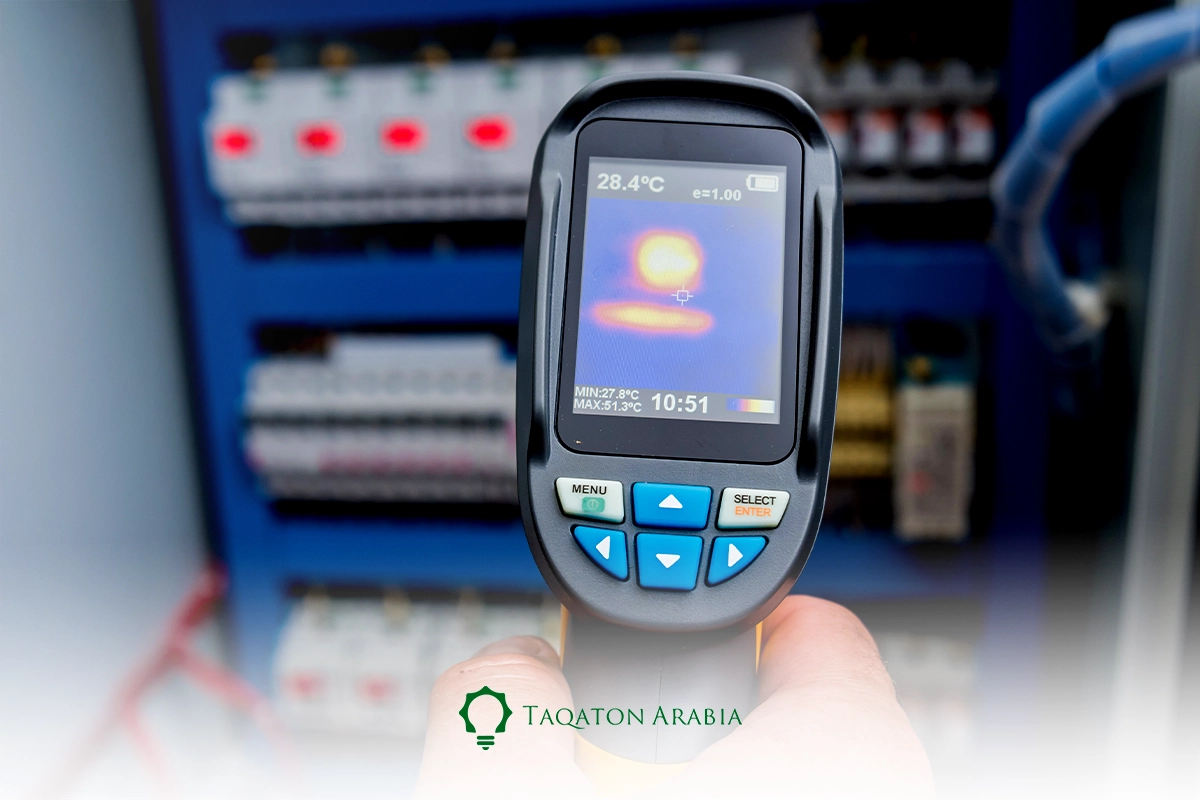
Electrical thermal imaging is based on detecting infrared radiation naturally emitted by objects according to their temperature. The thermal camera captures this infrared energy and converts it into a visual image that represents the temperature distribution across the inspected surface.
During an inspection, the camera is directed toward the electrical equipment from a safe position. It records thermal data and produces an image showing temperature variations between different components. Engineers then evaluate these readings in relation to the equipment’s operating conditions rather than relying solely on the colors displayed by the camera.
For example, when performing thermal imaging inspection of electrical panels, one connection may appear significantly hotter than similar connections operating under comparable conditions. This temperature difference could indicate a loose connection, increased resistance, or an excessive electrical load. However, the exact cause must be confirmed through engineering analysis and, where necessary, additional electrical testing.
The same principle applies to thermal inspection of electrical cables. Abnormal heat along a cable or around its connection points may indicate excessive loading, current imbalance, or connection problems.
For transformers, thermal inspection of electrical transformers provides information about heat distribution across different parts of the equipment. Transformer inspection using thermal imaging can reveal unusual thermal patterns that may require further investigation or maintenance.
One of the major advantages of this technology is that thermal images and measurements can be stored and compared with future inspections. This makes it possible to track whether a thermal condition remains stable or is gradually becoming more severe.
Also Read: Solutions for Preventing Factory Failures Using Thermal Imaging
Factors That Affect Thermal Imaging:
The accuracy of a thermal inspection does not depend solely on the camera. Several technical, environmental, and operational factors can influence the quality of thermal readings and how they should be interpreted.
Important factors include:
Electrical Load
The operating load has a direct impact on the temperature of electrical components. Performing an inspection under suitable real operating conditions generally makes abnormal temperature differences easier to identify.
Ambient Temperature
The surrounding temperature can influence equipment temperatures and must therefore be considered when analyzing thermal readings.
Emissivity
Different materials emit infrared radiation differently. This property, known as emissivity, should be correctly considered when using a thermal camera to obtain reliable temperature measurements.
Camera Distance and Angle
The distance between the camera and the inspected component, as well as the viewing angle, can affect image quality and measurement accuracy. Proper positioning is essential for obtaining useful thermal data.
Equipment Surface Condition
Dust, coatings, reflective surfaces, and other surface characteristics can affect thermal measurements. The condition and material of the inspected surface should therefore be considered during the assessment.
Thermal Camera Quality
Not all thermal cameras offer the same level of performance. Resolution, temperature measurement range, infrared sensitivity, and analysis features can vary considerably. Choosing the best thermal imaging cameras for inspecting electrical equipment is important, but professional interpretation of the results is equally critical.
A thermal image should not be treated as a final diagnosis by itself. Temperature anomalies need to be evaluated alongside operating data, equipment specifications, maintenance history, and other relevant electrical measurements.
Order the service now from Taqat Arabia website
How Can a Thermal Camera Help Detect Electrical Faults Early?
Some electrical faults begin with a relatively small temperature increase before becoming visible through conventional inspection methods. A thermal camera can detect these temperature differences and provide an early indication that a component requires further attention.
For instance, if one connection inside an electrical panel is considerably hotter than comparable connections under similar operating conditions, it may indicate increased resistance or a connection problem. Similarly, an unusually hot circuit breaker or cable connection may point to excessive loading or another electrical issue.
Electrical fault detection using thermal imaging can help identify warning signs associated with:
- Loose or deteriorated electrical connections
- Overloaded circuits
- Unbalanced electrical loads
- Increased resistance at connection points
- Abnormal heating in electrical panel components
- Excessive cable temperatures
- Unusual thermal patterns in transformers
The major advantage is the ability to identify an indication before the equipment reaches complete failure. Instead of waiting for a breaker to fail, a connection to burn, or equipment to shut down, maintenance personnel can investigate the abnormal area and take appropriate corrective action.
When thermal inspections are repeated periodically, the collected data can also be compared over time. This helps determine whether a thermal condition is stable or progressively deteriorating, making thermal imaging a valuable component of condition-based maintenance.
What Are the Main Uses of Thermal Cameras in Reducing Electrical Failure Risks?
The applications of thermal cameras extend beyond identifying isolated hot spots. Thermal imaging can be incorporated into routine monitoring programs to support maintenance decisions across a wide range of electrical systems.
Electrical Panel Inspection
Thermal inspection can be used to examine circuit breakers, connection points, busbars, and accessible electrical components. The results can highlight areas that require maintenance, closer investigation, or continued monitoring.
Transformer Monitoring
Thermal imaging provides a way to observe temperature distribution across transformers and identify unusual differences between various areas of the equipment. These findings can complement conventional electrical tests and other diagnostic procedures.
Cable Monitoring
Thermal cameras can be used to monitor temperature patterns along electrical cables, termination points, and connections. This can help identify conditions related to excessive loading, current imbalance, or connection problems.
Preventive Maintenance Support
When thermal inspection is included in a regular maintenance program, facilities can establish a thermal history for critical equipment. Comparing measurements over time helps maintenance teams identify assets requiring increased attention and prioritize maintenance activities.
Reducing Unexpected Shutdowns
A relatively minor electrical fault can cause significant operational losses in facilities that depend on continuous power. Thermal inspection provides early indicators that allow potential problems to be investigated before they reach a critical stage.
The effectiveness of these applications depends heavily on the expertise of the electrical inspection company performing the assessment. Capturing thermal images is only one part of the process; the real value comes from accurately interpreting the data and translating it into practical maintenance recommendations.
Order the service now from Taqat Arabia website
How Does Thermal Camera Inspection Improve Electrical Safety?
Electrical safety requires more than protective devices and proper installation. Continuous monitoring is also important for identifying operating conditions that could develop into hazardous situations.
Thermal camera inspection provides a non-contact method for monitoring the thermal condition of electrical components. In many cases, inspections can be performed while equipment remains in operation, allowing engineers to identify abnormal heat without directly touching energized components.
An unexpected temperature increase may be associated with excessive load, a poor connection, component deterioration, or increased electrical resistance. Identifying such conditions early gives maintenance teams an opportunity to investigate the source and take corrective action.
Thermal inspection can therefore contribute to electrical safety by:
- Identifying early indicators of electrical problems
- Reducing the likelihood of excessive overheating
- Supporting preventive maintenance activities
- Lowering the risk of unexpected electrical shutdowns
- Providing thermal information for prioritizing maintenance work
For the best results, electrical thermal imaging should be used alongside other electrical inspections and testing methods. This creates a more complete understanding of equipment condition instead of relying on visual inspection alone.
The Role of Thermal Imaging in Detecting Hot Spots:
Hot spots are areas where the temperature is noticeably higher than surrounding areas or comparable components. In electrical systems, these temperature differences can serve as early indicators of a developing problem, particularly when the affected component operates under conditions similar to those of neighboring components.
A thermal camera makes these differences visible and allows engineers to identify areas that require further investigation. This is particularly useful when inspecting circuit breakers, electrical connections, cables, busbars, and transformers.
However, a hot spot does not automatically indicate a single specific fault. The temperature increase may be influenced by electrical load, connection quality, environmental conditions, or the physical properties of the equipment surface. For this reason, thermal images should always be interpreted together with operating information and the technical specifications of the equipment.
The importance of electrical thermal imaging becomes especially clear when thermal measurements are documented and compared during subsequent inspections. This historical information can help maintenance teams monitor equipment condition and determine whether a thermal anomaly is stable or progressing.
Order the service now from Taqat Arabia website
Importance of Thermal Inspection for Electrical Transformers and Cables
Transformers and cables often operate under continuous electrical loads, which means that problems affecting their connections or operating conditions can lead to excessive heating. Over time, abnormal temperatures may affect equipment performance, reliability, and service life.
For this reason, thermal inspection of electrical equipment is an important part of monitoring and maintenance programs, especially in facilities where uninterrupted electrical supply is critical.
Transformer Inspection Using Thermal Imaging
Transformer thermal imaging inspection helps engineers observe heat distribution across different parts of the transformer and compare temperatures between areas. Unusual thermal patterns may indicate a condition that requires further investigation or maintenance.
Regular thermal inspection of electrical transformers can also support predictive maintenance by creating a record of the transformer’s thermal condition. Comparing results from different inspection periods can reveal gradual changes that may otherwise go unnoticed.
Thermal Inspection of Electrical Cables
Thermal inspection of electrical cables focuses on identifying abnormal temperature increases along the cable body, termination points, and connections. These findings can help maintenance teams investigate possible causes such as excessive loads, current imbalance, or connection issues.
Combining thermal imaging results with appropriate electrical measurements and testing provides a more reliable basis for assessing cable and transformer condition and developing maintenance plans according to the actual risk level.
Regular professional inspections can therefore contribute to greater electrical network reliability, fewer unexpected failures, and more stable equipment operation over the long term.
Order the service now from Taqat Arabia website
Benefits of Thermal Inspection in Preventive Maintenance
Preventive maintenance is built around identifying signs of deterioration before they develop into actual failures. Electrical thermal inspection adds an important diagnostic layer to this approach by providing temperature data that can be monitored and compared over time.
When thermal inspection becomes part of a regular maintenance schedule, teams can identify equipment requiring attention before an unexpected shutdown occurs.
Key benefits include:
- Early identification of developing problems: Abnormal temperature changes can be detected before they become major failures.
- Maintenance prioritization: Inspection results help teams determine which components require immediate action and which can continue to be monitored.
- Fewer unexpected failures: Regular monitoring provides early warning signs that support timely intervention.
- Longer equipment life: Addressing sources of excessive heat can reduce thermal stress on electrical components.
- Lower maintenance expenses: Early detection can reduce the need for extensive repairs or replacement of damaged equipment.
- Equipment condition tracking: Thermal images and temperature readings can be stored and compared with future inspections.
Thermal inspection should not be considered a replacement for other electrical tests. Instead, it works as a complementary diagnostic method that provides valuable information about the thermal behavior of equipment. When integrated into a broader maintenance strategy, it can strengthen system reliability and operational continuity.
Other Services Provided by Taqaton Arabia
The expertise of Taqaton Arabia extends beyond thermal imaging. The company provides a range of engineering solutions designed to improve system efficiency, strengthen safety, and reduce operational risks across industrial, commercial, and administrative facilities.
Key services include:
- ASHRAE Energy Audits: Assessing energy consumption and identifying opportunities to improve energy efficiency and reduce waste.
- Arc Flash Studies: Evaluating arc flash hazards and developing recommendations to improve personnel and equipment safety.
- Power Quality Analysis: Assessing electrical power quality and identifying issues that may affect equipment performance.
- Electrical Inspection and Testing: Evaluating electrical distribution systems and components according to project requirements.
- Preventive and Predictive Maintenance Solutions: Using inspection data to help facilities move from reactive maintenance toward proactive planning.
- Energy Efficiency and Sustainability Solutions: Identifying opportunities to reduce consumption, minimize waste, and improve operational performance.
By combining engineering expertise with modern inspection technologies, Taqaton Arabia develops practical solutions tailored to the specific requirements of each facility.
Order the service now from Taqat Arabia website
Contact Taqaton Arabia, the Best Thermal Imaging Company in Saudi Arabia
If your facility relies on electrical systems that require continuous monitoring, professional thermal inspection can provide valuable insight into equipment condition and help identify potential problems before they become operational issues.
Taqaton Arabia provides specialized electrical thermal imaging services covering electrical panels, transformers, cables, and other critical equipment. Our approach goes beyond capturing thermal images by analyzing the results and preparing technical reports that support informed maintenance decisions.
Whether you need a scheduled inspection, want to investigate abnormal heating in an electrical component, or are looking to strengthen your preventive maintenance program, our team can determine the appropriate inspection scope based on your facility and operating requirements.
Contact Taqaton Arabia to discuss your thermal inspection requirements and benefit from the expertise of a specialized team providing electrical inspection and thermal imaging solutions across Saudi Arabia.
Frequently Asked Questions:
Does Thermal Inspection Help Detect Electrical Faults?
Yes. Electrical thermal inspection can identify early indicators of several electrical problems, including overheated connections, excessive loads, unbalanced loads, and abnormal heating in circuit breakers, cables, and other electrical components. These conditions appear as temperature variations that engineers can analyze to determine which areas require additional inspection or maintenance.
Can Thermal Inspection Be Performed While Equipment Is Operating?
In most applications, electrical thermal imaging can be performed while equipment is operating under normal conditions. In fact, an actual electrical load can make temperature differences easier to identify. However, inspections involving energized equipment must always be performed by qualified professionals following appropriate safety procedures.
How Often Should Electrical Thermal Inspections Be Conducted?
There is no single inspection frequency that applies to every facility. The appropriate schedule depends on equipment type, electrical loads, system criticality, operating conditions, and previous failure history.
Some facilities may benefit from annual inspections, while critical systems or equipment operating under heavy loads may require more frequent monitoring. A suitable schedule should ideally be established based on a technical risk assessment and the actual condition of the equipment.
Does Thermal Inspection Replace Electrical Maintenance?
No. Thermal imaging is an important diagnostic tool, but it does not replace comprehensive electrical maintenance or specialized electrical testing. Thermal inspection primarily identifies temperature variations that may indicate a problem, while additional measurements and tests may be required to determine the exact cause.
For this reason, the best approach is to integrate thermal inspection with preventive maintenance programs and other appropriate electrical testing procedures.
Is Electrical Thermal Inspection Suitable for Factories and Commercial Facilities?
Yes. Electrical thermal inspection can be applied across a wide range of facilities, including factories, commercial buildings, warehouses, hospitals, data centers, administrative buildings, and other sites with critical electrical infrastructure.
The value of thermal inspection is particularly high in facilities where electrical equipment operates for extended periods or under significant loads, as it can help identify abnormal temperature patterns, monitor asset condition, and reduce the likelihood of unplanned downtime.