
Electrical Power Quality affects how reliably machines, control systems, and sensitive electronic equipment operate. A facility may have an uninterrupted electricity supply and still experience voltage fluctuations, harmonic distortion, or brief disturbances that cause unexpected shutdowns. Taqaton Arabia provides power quality analysis as part of its electrical engineering and energy solutions in Saudi Arabia, helping facilities investigate these problems through measurements and informed technical decisions.
Understanding how power behaves under actual operating conditions is essential before replacing equipment or investing in corrective devices. This guide explains the main disturbances, the analysis process, applicable international standards, and how the findings can support safer, more reliable operations.
What Is Electrical Power Quality?
Electrical power quality describes how closely the voltage, frequency, and waveform supplied to equipment match the conditions required for satisfactory operation. The term power quality includes sustained deviations and short events, such as voltage sags, swells, interruptions, phase imbalance, and harmonic distortion.
A single voltage reading cannot reveal all these events. Some appear only when heavy machinery starts, while others last milliseconds or occur during particular production shifts. An effective assessment therefore combines appropriately selected measurements with information about the facility’s loads and operating schedule.
Why Is Electrical Power Quality Important for Facilities?
The same disturbance can affect equipment differently. A motor may continue running through a minor voltage sag, while a programmable logic controller (PLC), server, or medical device may reset. Understanding the supply characteristics helps operators protect critical processes without assuming every breakdown originates from the electricity supply.
A well-planned assessment can support:
- Greater continuity of production and building operations.
- Better protection of sensitive automation and IT equipment.
- Investigation of abnormal heating in transformers, cables, or distribution equipment.
- Better-informed decisions about network expansion and new electrical loads.
- Prioritization of corrective measures based on recorded evidence.
The objective is to identify meaningful electrical risks and address their causes, rather than simply treating recurring symptoms.
Read also: Solar Water Heater Maintenance
How to Choose a Power Quality Analysis Company?
A reliable provider should do more than install a meter and generate graphs. It should be able to interpret those graphs in relation to the electrical network, connected equipment, and operational complaints.
Before selecting a company, consider whether it can:
- Define the problem and select suitable monitoring locations.
- Use measurement equipment appropriate for the required events and accuracy.
- Plan testing around real load conditions and safe access procedures.
- Distinguish measured facts from possible causes that still require verification.
- Deliver a report with event timelines, relevant standards, findings, and corrective options.
- Recommend follow-up measurements to verify whether the solution worked.
Confirm the study scope in advance. Harmonics analysis at the point of common coupling is not the same assignment as diagnosing repeated shutdowns on one production line.
Order the service now from Taqat Arabia website
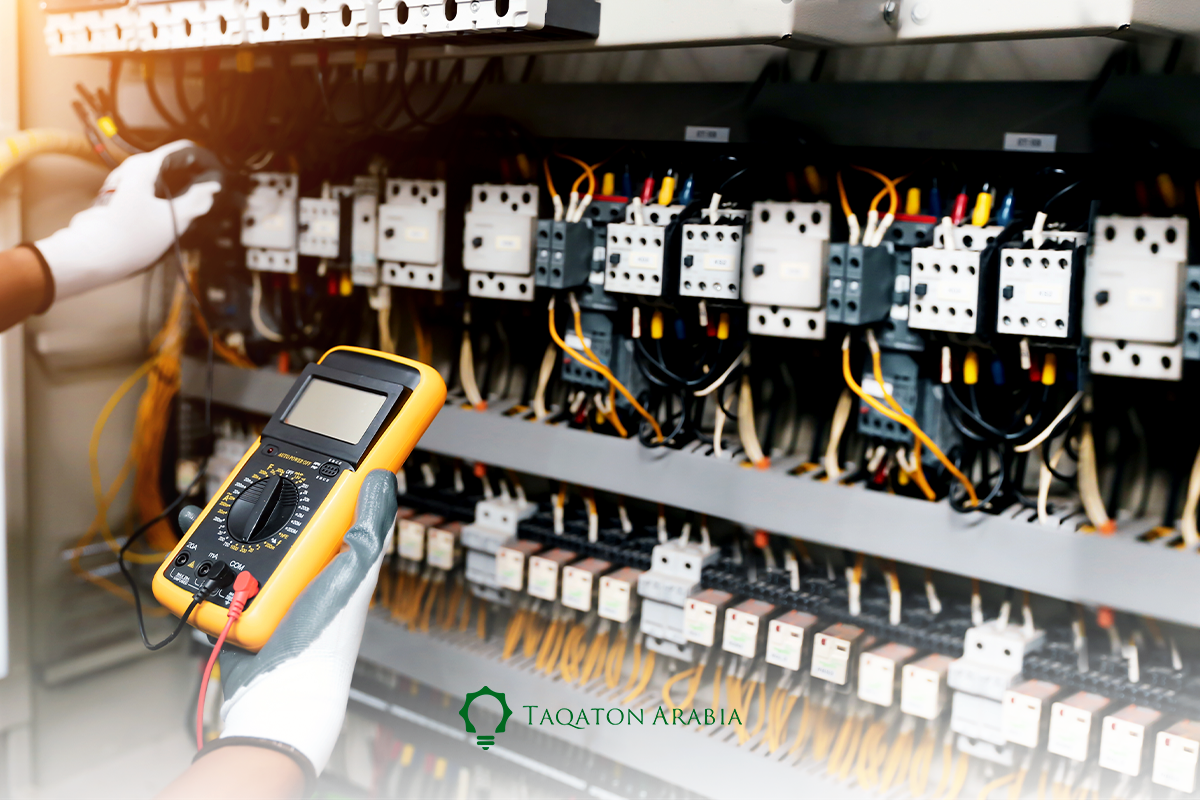
Why Choose Taqaton Arabia for Power Quality Analysis?
Taqaton Arabia combines power systems engineering with electrical testing, energy efficiency, and asset condition monitoring. This is useful when a facility needs to understand whether an electrical disturbance is linked to operating loads, a network design issue, or equipment condition.
The company’s related capabilities include thermal imaging, electrical safety assessments, and engineering studies. A project can therefore be scoped around the actual symptoms, with complementary inspections considered where appropriate rather than automatically included.
The aim is a practical engineering outcome: clear measurement findings, a reasoned interpretation, and recommendations that maintenance and operations teams can evaluate before implementation.
Order the service now from Taqat Arabia website
Key Electrical Power Quality Problems Addressed by Taqaton Arabia:
Several categories of disturbance may contribute to Poor Power Quality. Identifying the category first helps determine which measurements and remedies matter.
Voltage sags, swells, and interruptions
A voltage sag is a temporary reduction in RMS voltage; a voltage swell is a temporary increase. Short interruptions may be particularly disruptive to automation. Recording their magnitude, duration, and timing helps establish whether they coincide with machine starts or other events.
Harmonics and waveform distortion
Nonlinear loads, including certain variable-frequency drives and electronic power supplies, draw currents that distort the ideal sinusoidal waveform. Excessive distortion can contribute to heating or interference under some conditions, so both voltage and current harmonics should be interpreted at the appropriate measurement point.
Voltage and current imbalance
Unequal loading, distribution issues, or equipment faults may cause differences between phases. Significant voltage imbalance can negatively affect three-phase motors and should be assessed against the equipment and system requirements.
Rapid voltage changes and light flicker
Fast fluctuations can create noticeable lighting flicker or other operating issues. Light flicker is a power quality phenomenon; it is not the same as an Arc Flash Study, which assesses the hazards of an electrical arc fault.
Common Causes of Poor Power Quality:
What Causes Power Quality Degradation? The source may be inside the facility, upstream in the supply network, or a combination of both. Common contributors include:
- Starting large motors, compressors, lifts, or other high-inrush loads.
- Variable-frequency drives, rectifiers, and other nonlinear equipment.
- Uneven loading across the three phases.
- Loose, damaged, or unsuitable electrical connections and components.
- Capacitor-bank switching or unsuitable power factor correction arrangements.
- Grid disturbances and changes in neighboring or on-site loads.
- Expansion of the electrical system without reviewing its capacity and behavior.
These are possible causes, not automatic diagnoses. A properly timed recording can help connect an observed event with the equipment operating at that moment.
Read also: A Guide to Steam Trap Testing
Order the service now from Taqat Arabia website
Negative Effects of Poor Power Quality on Equipment and Facilities:
The consequences depend on the disturbance type, severity, and equipment sensitivity. A short sag may reset a control unit and halt production. Sustained imbalance or excessive harmonic currents may increase thermal stress in selected electrical components.
Facilities may face downtime, lost output, repeated maintenance interventions, interrupted digital services, or premature deterioration of equipment subjected to prolonged electrical stress. However, an unusually high electricity bill is not proof of a waveform problem. That concern may require an Energy Audit to distinguish consumption patterns and efficiency opportunities from supply-quality issues.
Signs Your Facility Needs a Power Quality Analysis:
A technical assessment is worth considering when there is a recurring pattern that routine troubleshooting has not explained. Typical warning signs include:
- Unexplained PLC, computer, or server resets.
- Production equipment stopping when another machine starts.
- Frequent UPS or drive alarms.
- Unexpected operation of protective devices.
- Abnormal transformer or panel temperatures.
- Problems concentrated during peak-load periods.
- New disturbances after a production-line expansion or equipment upgrade.
These indicators do not establish the cause on their own. Some also warrant separate equipment testing or Electrical Thermal Inspection to investigate a suspected hot connection.
Order the service now from Taqat Arabia website
What Parameters Does the Taqaton Arabia Team Measure in Power Quality Analysis?
Depending on the facility’s network, the complaint, and the selected analyzer, the study may measure the following parameters:
| Parameter | What it helps reveal |
| RMS voltage | Operating voltage and changes over time |
| Frequency | Stability of the electrical supply frequency |
| Voltage sags, swells, and interruptions | Event magnitude, duration, and timestamps |
| Voltage and current harmonics; THD | Waveform distortion and harmonic content |
| Phase imbalance | Differences between phases in three-phase systems |
| Current, power, and power factor | Load behavior and electrical demand |
| Rapid voltage changes and flicker | Repeated voltage variations affecting lighting and operation |
| Transient overvoltages | Fast disturbances, where instrument capability and settings permit capture |
No individual reading establishes noncompliance by itself. The reference standard, measurement location, reporting period, and operating conditions must all be considered.
How Is Electrical Power Quality Analyzed Step by Step with Taqaton Arabia?
1. Define the operational problem
The process begins with the symptoms, affected equipment, event history, available single-line diagrams, and operating schedule. The goal is to formulate a specific question that the measurements can answer.
2. Select monitoring points and establish safe access
Qualified personnel identify the appropriate boards or connection points, compatible voltage and current sensors, instrument ratings, and required safety controls. Connecting monitoring instruments to energized electrical equipment is not a do-it-yourself task.
3. Record representative operating conditions
The analyzer logs selected indicators and events while the facility operates. Daily recurring disturbances may be captured quickly; intermittent issues may require several days or longer to observe.
4. Correlate electrical events with equipment operation
Engineers review waveforms, trends, event timestamps, and harmonic measurements alongside operational records. This helps distinguish an observed correlation from a cause that still needs additional tests.
5. Prepare findings and corrective recommendations
A useful report identifies the measured conditions, their significance, any remaining uncertainties, and options for improvement. It may recommend targeted testing before costly equipment is replaced.
6. Verify performance after corrective work
Where appropriate, follow-up measurements compare similar operating conditions before and after the intervention. This establishes whether the relevant problem was actually reduced.
Order the service now from Taqat Arabia website
How Do Power Quality Analyzers Work and What Are Their Types?
Power quality analyzers sample voltage and current signals and process them to calculate RMS values, frequency, harmonics, and event statistics. Their capabilities differ in accuracy, sampling speed, channel count, data storage, and communications.
Portable analyzers
Portable units support temporary investigations across panels or distribution points. They are useful when engineers need to isolate a problem and move the instrument between locations.
Permanently installed monitoring devices
Fixed monitors can track critical feeders over extended periods and may integrate with facility management or alerting systems. They are particularly useful when disturbances happen infrequently.
High-speed event recorders
Specialized recorders can capture fast transients that may not be resolved by basic logging settings. Instrument selection should follow the type of event being investigated, rather than relying on a generic product description.
International Standards and Specifications for Power Quality Analysis and Compliance:
International Standards and Specifications for Power Quality provide common methods for measurement and, in some cases, criteria for interpreting results. Their roles should not be confused:
- IEC 61000-4-30:2025 specifies methods for measuring power quality phenomena in 50/60 Hz AC systems, including Class A and Class S measurement approaches. It describes measurement methods rather than setting a single universal pass/fail limit for every facility.
- IEC 61000-4-7 addresses measurement of harmonics and interharmonics and relevant instrumentation.
- IEEE 519-2022 sets harmonic distortion objectives at the applicable point of common coupling (PCC) under defined conditions; its limits should not be applied indiscriminately to every internal equipment terminal.
The appropriate Saudi regulatory or contractual requirements, measurement point, and applicable edition should be confirmed for each project. Use of a standards-aligned analyzer does not automatically certify the entire facility as compliant.
Order the service now from Taqat Arabia website
Benefits of Electrical Power Quality Analysis and Harmonics Analysis with Taqaton Arabia:
The main value of this analysis is turning intermittent complaints into evidence-based maintenance decisions. Harmonics and event recordings can reveal whether a disturbance is generated by particular loads, present at an upstream connection, or associated with a specific operating condition.
The findings can help facilities avoid unnecessary equipment replacement, prioritize the most consequential issues, evaluate planned expansions, and establish baseline measurements for future comparison. They also provide a technical foundation for discussing corrective investments with engineering and operations teams.
Power Quality Improvement and Maintenance Solutions with Taqaton Arabia:
Corrective measures depend on what the study actually finds. Possible recommendations include:
- Redistributing loads to reduce phase imbalance where appropriate.
- Reviewing conductor sizing, connections, and distribution arrangements.
- Evaluating harmonic filters or reactors for suitable applications.
- Considering voltage regulation or protection measures for sensitive loads.
- Reviewing control settings and protection coordination.
- Establishing Preventive Maintenance inspections and post-correction monitoring.
Thermal Inspection of Electrical Panels can complement power measurements by detecting unusual temperature patterns at accessible components under suitable operating conditions. A thermal camera does not measure harmonic distortion; thermal findings need their own interpretation and, where necessary, electrical verification.
For critical equipment, recurring measurement and condition-monitoring data may support Predictive Maintenance rather than relying only on fixed inspection schedules.
Order the service now from Taqat Arabia website
Power Quality Analysis Applications Across Different Sectors:
Manufacturing and industrial operations
An analysis can connect sags or harmonic patterns with motor starts, production machinery, variable-speed drives, and automation failures. The outcome is especially useful when unexplained stoppages affect output.
Healthcare facilities
Hospitals and clinics may need to evaluate supply disturbances affecting sensitive equipment, backup arrangements, and critical building services. The scope should reflect the actual design and operational risk.
Data centers and commercial buildings
Monitoring can identify events affecting servers, electronic loads, and uninterruptible power supplies. UPS Battery Maintenance and Testing is a related but separate activity: AC power quality measurements alone do not determine battery capacity, internal condition, or DC backup performance.
Real estate developments and solar-connected facilities
Electrical analysis may be useful when new buildings, additional tenants, or inverter-based generation change the load profile. The study can inform connection, expansion, and equipment performance decisions without assuming that solar generation is the source of a disturbance.
Order the service now from Taqat Arabia website
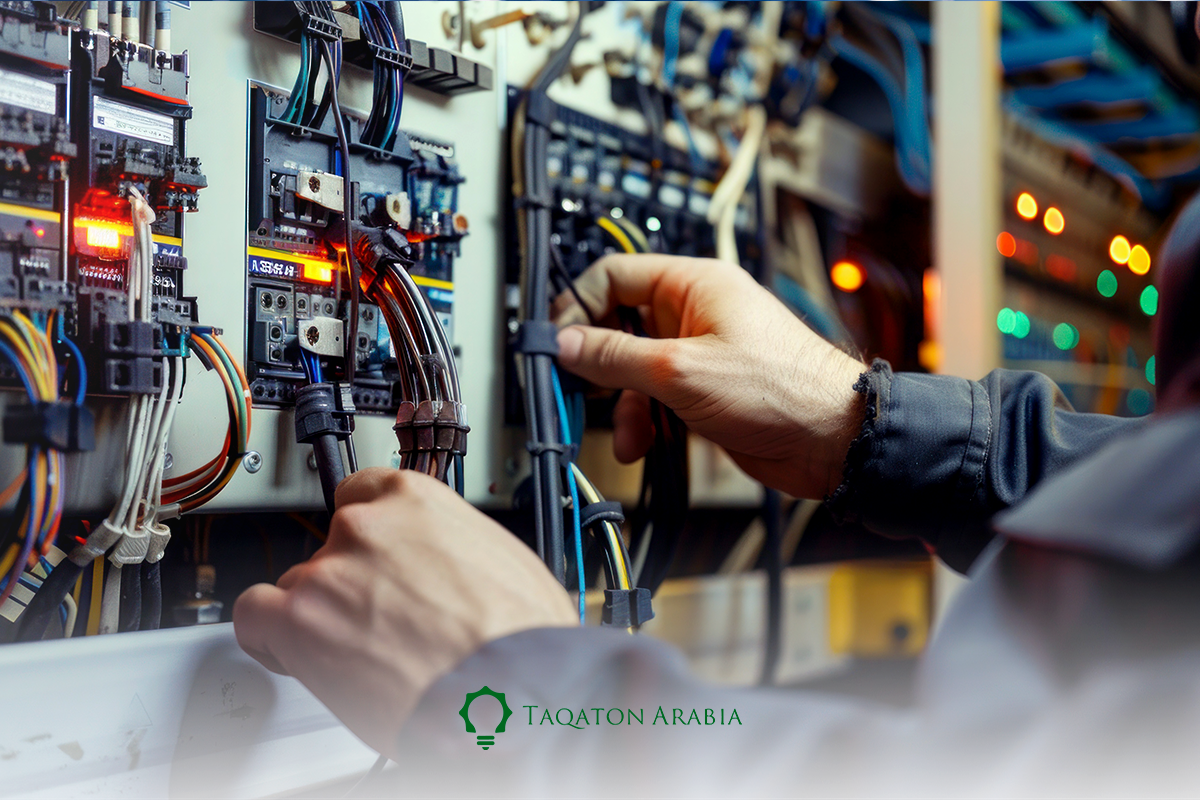
Other Services Provided by Taqaton Arabia:
Electrical disturbances sometimes coexist with asset-condition or safety problems. Taqaton Arabia offers complementary engineering and reliability solutions that can be considered under a suitable project scope:
- Electrical Thermal Inspection: Thermal imaging of electrical panels, connections, and equipment to identify unusual heating patterns. When selecting an Electrical Thermal Inspection Company, consider safe inspection practices and the quality of technical interpretation.
- Arc Flash Study: Assessment of arc-flash hazards and associated electrical safety considerations. This is separate from light flicker caused by voltage fluctuations.
- Short Circuit Study: Evaluation of prospective fault currents to support electrical system design and protective-device selection; it is not a substitute for power quality monitoring.
- Energy Audit: Assessment of consumption and energy-efficiency opportunities, which answers a different question from waveform and event analysis.
- Condition monitoring and Predictive Maintenance: Use of inspection and operating data to guide attention toward deteriorating assets, including appropriate Predictive Maintenance for Electrical Transformers.
- Electrical testing and earth resistance testing: Targeted tests that help evaluate specific installation and safety requirements.
Each service requires its own methodology and agreed deliverables. Not every complementary test is automatically part of a power quality study.
Order the service now from Taqat Arabia website
How to Request a Power Quality Analysis Service from Taqaton Arabia?
To request a suitable assessment, describe your facility, affected equipment, and the disturbances you have observed. Useful supporting information includes the timing and frequency of failures, recent load additions, UPS or drive alarms, transformer capacity, and an available single-line diagram.
Based on the problem, the appropriate monitoring locations, recording duration, safety requirements, and expected reporting scope can be discussed before work begins. A clear brief helps focus the investigation on your operational priority and avoids unnecessary tests.
Our Clients:
Taqat Arabia is proud to be trusted by a select group of leading organizations across diverse sectors, including:
NEOM, Jeddah Airports Company (JEDCO), Heritage Sites Co., and Saudi Sdn Water & Energy Co. In the healthcare sector, it works with the Armed Forces Medical Services, Andalusia Hospitals, International Medical Center, and Jamjoom Pharma. In hospitality, its clients include leading global brands such as Marriott, Ramada, Park Inn by Radisson, Four Points by Sheraton, Mövenpick Hotel & Residences Riyadh, and Aloft Hotels. Its clients also include major groups and companies such as Landmark Group, Zahid Group, Bin Dawood, Halwani Bros, Tamgo, ARASCO, Baytoti, Al Adwani, Mohammad Al Habib, Arabian Japanese Membrane Company (AJMC), GCC Electrical Testing Laboratory, and SMI.






Order the service now from Taqat Arabia website
Frequently Asked Questions:
How Often Should Industrial Facilities Perform a Power Quality Analysis?
There is no universal interval. Repeat an analysis when recurring faults appear, major loads are added, or significant network changes occur. Critical facilities may also establish periodic checks or continuous monitoring based on their risk profile.
Can Power Quality Analysis from Taqaton Arabia Include DC Systems?
Conventional IEC 61000-4-30 power quality measurements apply to AC systems. DC circuits, including UPS battery strings, require appropriate instruments and dedicated tests. A separate DC assessment can be discussed if relevant to the project.
What Is the Cost of Power Quality Disturbances?
Costs vary with lost production, repair work, process disruption, and possible data or service interruptions. The best estimate is based on actual incident frequency and the financial impact on the facility, not a universal figure.
Can Power Quality Analysis from Taqaton Arabia Detect Sudden Voltage Surges?
Yes, provided the selected instrument and recording settings can capture the event. A short voltage swell and an extremely fast transient are different phenomena, and the latter may require specialized recording capability.
Is Continuous Power Quality Monitoring Better Than Periodic Testing with Taqaton Arabia?
Continuous monitoring is valuable for critical operations and unpredictable events. Periodic testing may be sufficient for stable systems or defined investigations. The appropriate choice depends on risk, disturbance frequency, and operating requirements.
How Long Does a Power Quality Analysis Take with Taqaton Arabia?
It depends on the number of monitoring points and how often the problem occurs. Repeated daily events may need a short study, while rare disturbances may require days or longer. The monitoring period is set as part of the project scope.
Contact Taqaton Arabia for Electrical Power Quality Analysis in Saudi Arabia:
If your facility experiences unexplained shutdowns, harmonic distortion, or recurring voltage disturbances, contact Taqaton Arabia to discuss a measurement-based assessment of your electrical system. The right analysis can help you identify technical priorities and plan practical improvements to reliability and operational performance.
Taqaton Arabia — +966561162097
Contact us today to enquire about power quality analysis and engineering solutions tailored to your facility.