
How is thermal imaging performed? Thermal imaging has become one of the most advanced and effective technologies used in modern maintenance and inspection processes. By using infrared thermal cameras, engineers and technicians can detect temperature variations that are invisible to the naked eye, allowing them to identify potential issues before they develop into serious failures.
Today, thermal imaging technology is widely applied across various industries, including electrical systems, mechanical equipment, industrial facilities, and preventive maintenance inspection programs. Through infrared thermography, organizations can improve operational efficiency, enhance safety, reduce downtime, and lower maintenance costs.
One of the key advantages of thermography is its ability to perform non-contact inspections while systems remain operational. This makes it an ideal solution for monitoring electrical panels, motors, transformers, and other critical equipment without interrupting daily operations.
At Taqat Arabiya, we utilize the latest infrared thermal cameras and advanced thermal imaging techniques to deliver accurate diagnostics and reliable maintenance solutions that support safety, efficiency, and long-term operational sustainability.
What Is Thermal Imaging Technology?
Thermal imaging technology is a method of capturing and analyzing heat emitted by objects using infrared radiation. Unlike standard cameras that rely on visible light, thermal imaging cameras detect temperature differences and convert them into visible thermal images. These images allow technicians and engineers to identify abnormal heat patterns that may indicate equipment malfunctions or energy losses.
Infrared thermography is commonly used in electrical maintenance, industrial inspections, building diagnostics, and preventive maintenance inspection programs. It helps detect overheating components, loose electrical connections, overloaded circuits, insulation failures, and mechanical wear before they lead to costly breakdowns.
Modern infrared thermal cameras provide highly accurate temperature measurements and detailed thermal analysis, making thermal imaging an essential tool for improving system reliability, operational safety, and energy efficiency.
Order the service now from Taqat Arabia website
How Is Thermal Imaging Performed?
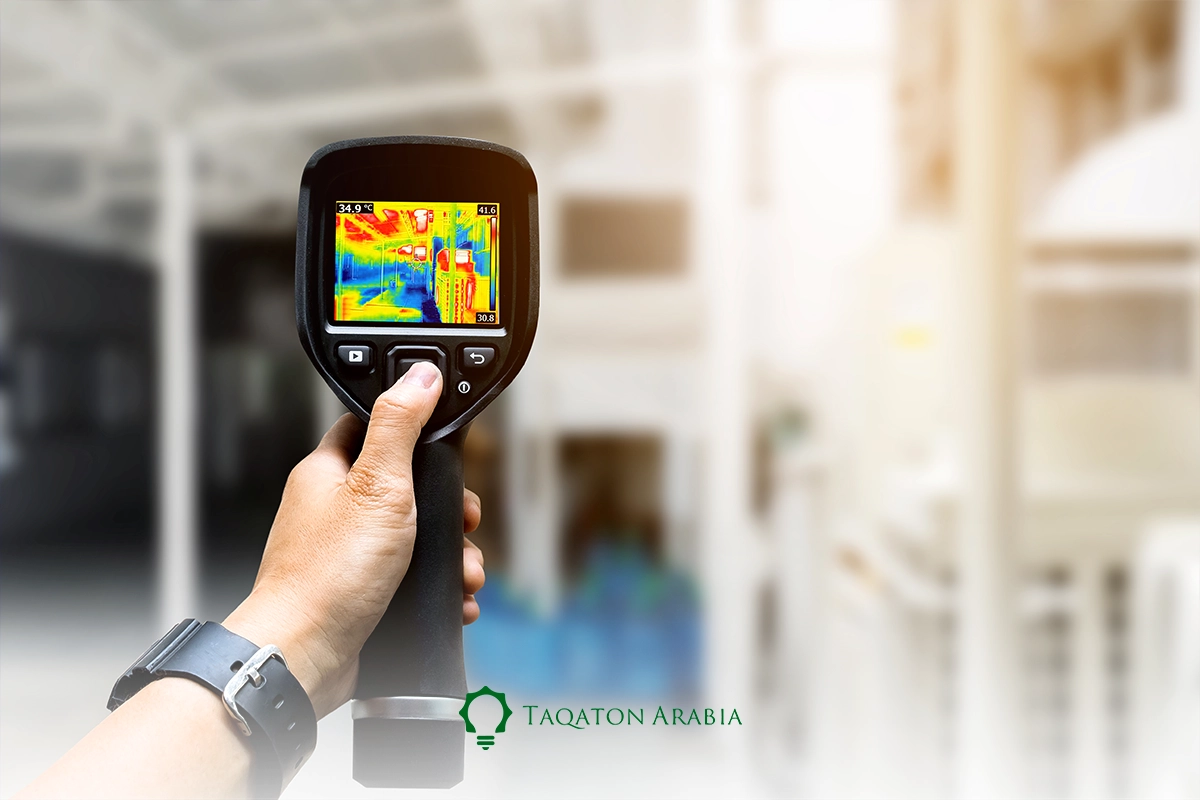
Thermal imaging is performed using specialized infrared thermal cameras that capture heat emitted from equipment and surfaces. The process begins by preparing the inspection area and ensuring that systems are operating under normal conditions, as active equipment produces the temperature variations needed for accurate thermal analysis.
During the inspection, technicians use thermal cameras to scan electrical panels, cables, motors, transformers, mechanical equipment, or building components. The camera detects infrared radiation and converts it into thermal images that display temperature differences using various color patterns. Areas with unusually high temperatures, often called “hot spots,” may indicate underlying issues such as overloaded circuits, loose connections, friction, or insulation problems.
After capturing the thermal images, the data is analyzed to identify abnormal thermal patterns and determine the severity of potential issues. Detailed reports are then prepared, including thermal images, temperature measurements, findings, and maintenance recommendations.
This process allows organizations to detect faults early, improve safety, and support predictive and preventive maintenance strategies without shutting down operations.
Order the service now from Taqat Arabia website
Benefits of Thermal Imaging
Thermal imaging offers numerous advantages for industrial, commercial, and electrical maintenance applications. One of the main benefits is the ability to detect problems early before they become major failures, helping organizations reduce repair costs and avoid unexpected downtime.
Infrared thermography also improves operational safety by identifying overheating equipment and electrical hazards that could lead to fires or system failures. Since inspections are non-contact and can be performed while systems are running, thermal imaging minimizes risks to maintenance personnel and prevents interruptions to operations.
Another major benefit is improved maintenance planning. Thermal imaging supports preventive maintenance inspection programs by providing real-time condition monitoring and helping organizations schedule repairs based on actual equipment condition rather than routine intervals.
Additionally, thermal imaging contributes to energy efficiency by detecting heat losses, overloaded systems, and inefficient equipment performance, enabling organizations to optimize energy consumption and reduce operational costs.
Order the service now from Taqat Arabia website
The Main Advantages of Thermal Imaging Cameras
Infrared thermal cameras provide several important advantages that make them essential tools in modern inspection and maintenance operations.
- Non-Contact Inspection: Thermal cameras allow equipment inspection from a safe distance without direct contact.
- Real-Time Temperature Detection: They instantly identify temperature variations and overheating components.
- Early Fault Detection: Thermal imaging helps discover issues before they cause equipment failure or downtime.
- Enhanced Safety: Detects electrical and mechanical hazards while minimizing exposure to dangerous environments.
- Reduced Maintenance Costs: Early diagnosis prevents costly emergency repairs and extends equipment lifespan.
- Improved Operational Efficiency: Supports predictive maintenance strategies and minimizes unplanned shutdowns.
- Energy Efficiency Monitoring: Helps identify energy losses and inefficient system performance.
At Taqat Arabiya, we use advanced thermal imaging technology and professional infrared thermography solutions to help businesses maintain safe, efficient, and reliable operations.
Also Read: Best Certified Thermal Imaging Company in Saudi Arabia
Stages of Thermal Imaging for Electrical Equipment
The process of thermal imaging for electrical equipment follows several organized stages to ensure accurate results and effective fault detection. Each stage plays an important role in evaluating the condition of electrical systems and identifying potential issues before they lead to failures.
1. Preparation and Planning
The inspection process begins with reviewing system information, electrical drawings, and equipment details. Technicians identify critical components that require inspection and ensure that the equipment is operating under normal load conditions for accurate thermal readings.
2. Thermal Scanning
Using advanced infrared thermal cameras, technicians scan electrical panels, transformers, circuit breakers, cables, and other components. The camera captures thermal images that display temperature variations across the equipment.
3. Identifying Hot Spots
During the inspection, abnormal heat patterns or “hot spots” are identified. These areas may indicate loose connections, overloaded circuits, insulation problems, phase imbalance, or equipment deterioration.
4. Thermal Image Analysis
The captured thermal data is analyzed using thermography software and engineering expertise to determine the severity and possible causes of overheating. This stage helps prioritize maintenance actions based on risk levels.
5. Reporting and Recommendations
A detailed report is prepared containing thermal images, temperature measurements, detected issues, and recommended corrective actions. These reports support maintenance teams in improving system reliability and operational safety.
Applications of Thermal Imaging in Preventive Maintenance
Thermal imaging plays a major role in preventive maintenance inspection programs across industrial, commercial, and electrical sectors. By detecting abnormal temperature changes early, organizations can prevent equipment failures and improve operational efficiency.
Some of the most common applications include:
- Electrical Maintenance: Detecting overheating electrical panels, transformers, circuit breakers, and loose connections.
- Mechanical Equipment Inspection: Monitoring motors, bearings, pumps, and rotating equipment for excessive friction or wear.
- Industrial Systems Monitoring: Identifying thermal abnormalities in production lines and industrial machinery.
- Building Inspections: Detecting heat loss, insulation defects, air leakage, and moisture problems in buildings.
- Energy Efficiency Assessment: Identifying inefficient systems and areas of energy waste.
- Predictive Maintenance Programs: Supporting maintenance planning based on equipment condition rather than fixed schedules.
Infrared thermography helps organizations reduce downtime, lower maintenance costs, and extend equipment lifespan while maintaining safe operating conditions.
Also Read: How much does electrical thermal imaging cost?
Order the service now from Taqat Arabia website
Why Choose Arab Energies for Thermal Imaging Services?
Taqat Arabiya (Arab Energies) is one of the leading providers of thermal imaging and smart engineering solutions, offering professional inspection services based on advanced infrared thermography technologies.
Our team combines technical expertise with modern thermal imaging equipment to deliver highly accurate inspections and reliable diagnostic reports. We focus on identifying issues at early stages to help organizations reduce operational risks, improve equipment performance, and avoid costly downtime.
At Taqat Arabiya, we provide:
- Advanced infrared thermal imaging inspections
- Accurate fault detection and thermal analysis
- Comprehensive preventive maintenance support
- Detailed engineering reports and recommendations
- Customized solutions for industrial and commercial facilities
- High standards of safety, reliability, and operational efficiency
Our commitment to innovation and quality makes Taqat Arabiya a trusted partner for organizations seeking effective thermal imaging solutions and long-term operational sustainability.
Order the service now from Taqat Arabia website
How to Request Thermal Imaging Services from Arab Energies
Requesting thermal imaging services from Taqat Arabiya is a simple and efficient process designed to meet the needs of industrial, commercial, and electrical facilities.
The process typically includes:
-
Initial Consultation:
Contact our team to discuss your facility, inspection requirements, and operational concerns.
-
Site Evaluation:
Our specialists review the electrical systems and determine the scope of the thermal imaging inspection.
-
Scheduling the Inspection:
A suitable inspection date is arranged to ensure equipment is operating under proper load conditions for accurate thermal analysis.
-
Thermal Imaging Inspection:
Our engineers perform the inspection using advanced infrared thermal cameras and thermography techniques.
-
Reporting and Recommendations:
Clients receive a comprehensive report including thermal images, identified issues, risk evaluation, and maintenance recommendations.
At Taqat Arabiya, we ensure professional service delivery, accurate diagnostics, and practical solutions that support operational safety and efficiency.
Other Services Provided by Taqat Arabiya
In addition to thermal imaging services, Taqat Arabiya provides a wide range of engineering and energy solutions designed to improve operational efficiency, safety, and sustainability.
Our services include:
- Energy audits and energy efficiency assessments
- Arc flash studies and electrical safety analysis
- Preventive and predictive maintenance solutions
- Power quality analysis
- Electrical system inspection and testing
- Smart monitoring and energy management solutions
- HVAC system optimization
- Sustainability and energy-saving consulting services
Through advanced engineering expertise and innovative technologies, Taqat Arabiya helps organizations enhance performance, reduce operational costs, and achieve long-term reliability and sustainability.
Also Read: Solutions for Preventing Factory Failures Using Thermal Imaging
Order the service now from Taqat Arabia website
Order the service now from Taqat Arabia website
FAQS:
When is thermal inspection performed?
Thermal inspection is typically performed as part of preventive and predictive maintenance programs. It is recommended during normal operating conditions when electrical and mechanical systems are under load, allowing infrared thermal cameras to accurately detect abnormal heat patterns and potential faults.
Does thermal imaging help detect faults?
Yes, thermal imaging is one of the most effective technologies for early fault detection. Infrared thermography can identify overheating components, loose electrical connections, overloaded circuits, insulation problems, and mechanical wear before they develop into serious failures or cause unexpected downtime.
What are the disadvantages of thermal imaging?
Although thermal imaging offers many advantages, there are some limitations to consider. The accuracy of thermal inspection can be affected by environmental conditions, surface emissivity, viewing angles, and equipment load levels. In addition, thermal cameras detect temperature variations but may require further technical analysis to determine the exact root cause of a problem.
How can I request electrical thermal imaging services from Arab Energies Company?
You can request thermal imaging services from Taqat Arabiya (Arab Energies) by contacting the company directly through its official communication channels. Our engineering team will evaluate your requirements, schedule the inspection, and provide professional thermal imaging solutions tailored to your facility’s operational and maintenance needs.
What is the best company specialized in electrical thermal imaging in the Kingdom of Saudi Arabia?
Taqat Arabiya is considered one of the leading companies specializing in electrical thermal imaging services in Saudi Arabia. The company combines advanced infrared thermography technologies with engineering expertise to provide accurate inspections, preventive maintenance solutions, and reliable technical reports that improve safety, efficiency, and operational reliability.