Choosing the Best Energy Solutions Company in Saudi Arabia involves more than purchasing solar panels or comparing installation prices. A successful energy project starts with understanding a facility’s consumption, selecting the right technologies, and planning for long-term performance. Taqaton Arabia supports organizations across Saudi Arabia through renewable energy solutions, energy audits, solar photovoltaic systems, and operation and maintenance services. The goal is to align engineering decisions with actual energy demand, operating conditions, and project objectives.
Whether you manage a factory, commercial property, hotel, or residential development, the right approach considers technical feasibility, electrical safety, investment requirements, and future maintenance. This guide explains the available solutions, the differences between solar system configurations, and the practical steps to take before starting a project.
Why Is the Reliance on Renewable Energy Solutions Growing in Saudi Arabia? How to Choose the Best Energy Solutions Company in Saudi Arabia?
Renewable Energy is increasingly important to energy planning in Saudi Arabia as organizations explore ways to diversify their electricity supply and improve resource efficiency. The country’s solar resources create opportunities for generating electricity and heating water, but the viability of each application depends on the site, daily demand, system design, and commercial conditions.
For many facilities, the value of solar power lies in offsetting part of the electricity purchased during daylight hours and creating a clearer long-term energy strategy. These benefits are not automatic. Expected generation, electricity tariffs, installation costs, operational requirements, and applicable regulations all influence the outcome.
Working with an experienced Energy Solutions Company helps a project begin with an assessment rather than a predetermined equipment package. The most suitable technology should be chosen after evaluating what the building needs, when it needs energy, and how performance will be measured.
Why Is Taqaton Arabia the Best Energy Solutions Company in Saudi Arabia for Your Project?
Taqaton Arabia combines energy efficiency, renewable energy, electrical engineering, and asset reliability services. This integrated perspective is useful for facilities that need more than a one-time solar installation: they may also need to understand electricity consumption, assess system safety, and maintain performance after commissioning.
Key capabilities relevant to project planning include:
- Assessment before investment: Reviewing demand and operational priorities before recommending a solar or efficiency solution.
- Multiple energy technologies: Considering PV Systems, solar thermal water heating, and energy efficiency improvements according to the application.
- Performance support: Solar plant audits, cleaning solutions, and PV operation and maintenance for systems already in service.
- Complementary electrical expertise: Identifying when an additional electrical study or inspection would be useful for safety and reliability.
Choosing the Best Energy Solutions Company in Saudi Arabia for a specific project depends on the quality of the technical proposal, the clarity of the scope, and the suitability of the solution—not on a marketing label alone. Taqaton Arabia’s combination of services gives clients a practical starting point for evaluating those requirements.
Order the service now from Taqat Arabia website

Integrated Energy Solutions Services in Saudi Arabia Offered by Taqaton Arabia:
Our services address different stages of the energy project lifecycle, from identifying demand and efficiency opportunities to supporting the operation of installed systems.
Solar Photovoltaic Systems (Solar PV)
PV Systems convert sunlight into electrical energy for use in homes, businesses, and industrial facilities. A project assessment considers usable installation space, shading, expected generation, electrical compatibility, and the intended operating arrangement. Proper system sizing matters as much as the selected panels.
Solar Water Heaters
Solar Water Heaters use solar thermal collectors to heat water rather than generate electricity. They can be useful where hot-water demand is regular, including certain residential and hospitality applications. Solar thermal collectors and photovoltaic modules are different technologies, and each requires its own design and economic assessment.
Energy Audits and Solar Plant Assessments
An Energy Audit identifies opportunities to reduce unnecessary consumption in systems such as HVAC, lighting, and industrial equipment. A Solar Plant Audit has a different purpose: it reviews an existing plant’s performance, compares expected and actual generation, and identifies areas requiring further inspection or improvement.
Solar Panel Cleaning and Operations Support
Dust and surface soiling can reduce the sunlight reaching PV cells. Solar Panel Cleaning, monitoring, and operation and maintenance therefore form part of the long-term care of a solar installation. Cleaning methods and service intervals should reflect panel manufacturer instructions, site conditions, and safe access arrangements.
Order the service now from Taqat Arabia website
Benefits of Adopting Renewable Energy:
The value of Renewable Energy Solutions should be assessed in terms of measurable project outcomes. Depending on system design and site economics, potential benefits include:
- Better control over electricity purchases: On-site generation may offset grid electricity consumed during solar production hours.
- Reduced environmental impact: Generating solar electricity can displace energy supplied from more emissions-intensive sources.
- Productive use of available space: Suitable rooftops and designated ground areas may support electricity generation.
- Greater diversity in energy planning: Solar generation can complement existing supply arrangements.
- Long-term performance visibility: Monitoring data can support informed decisions about future expansion and equipment maintenance.
No responsible proposal should promise a fixed saving percentage or payback period before reviewing energy bills, load patterns, project costs, and relevant tariffs.
Key Applications of Energy Solutions by Sector:
Different industries have different demand profiles. The most effective solution starts with an understanding of how the facility operates.
Industrial Facilities
Factories use electricity for motors, production lines, ventilation, refrigeration, and supporting equipment. Solar generation may be considered for daytime loads, while efficiency assessments can identify waste that should be addressed before increasing generation capacity.
Commercial Properties and Hotels
Commercial buildings often have significant daytime electricity demand, while hotels may also require substantial quantities of hot water. A project may therefore assess both solar PV and solar thermal water heating, alongside HVAC and lighting efficiency measures.
Hospitals and Healthcare Facilities
Reliable electricity for critical medical and building systems is a priority. Solar power may reduce purchased electricity under suitable conditions, but it does not replace a properly engineered emergency power system or the need for coordinated protection and backup arrangements.
Real Estate Developments and Agricultural Sites
Developers can evaluate solar options during the design of new buildings. Agricultural projects may consider solar-powered water pumping where technically suitable. Pump capacity depends on required flow, pumping head, operating hours, and whether water or electrical storage is needed.
Read also : Best Thermal Imaging Cameras for Inspecting Electrical Equipment
Order the service now from Taqat Arabia website
How Is Solar Energy Converted into Electricity? And What Are the Main System Components?
Photovoltaic cells absorb sunlight and produce direct current (DC) electricity through the photovoltaic effect. An inverter converts that electricity into alternating current (AC) for compatible equipment or grid connection, depending on the system configuration.
A typical solar PV installation includes:
- Solar panels: Generate DC electricity from sunlight.
- Inverters: Convert DC to AC and manage relevant operating and protection functions.
- Mounting structures: Secure the panels while accounting for roof conditions and wind loads.
- Cables and protective equipment: Carry electricity and help protect circuits according to the design.
- Meters and monitoring systems: Provide information about generation, consumption, and system alerts.
- Batteries, when required: Store energy in systems specifically designed to include storage; they are not necessary for every PV installation.
Actual production is affected by cell temperature, shade, dust, panel orientation, and electrical losses. The rated capacity printed on a module does not represent constant output throughout the day.
Types of Solar Energy Systems a Provider Should Offer:
A qualified provider should be able to explain the main solar configurations and identify which one suits the customer’s needs. Understanding these categories does not mean every provider automatically supplies every configuration.
Grid-Tied Solar Systems (On-Grid)
Grid-tied systems operate alongside the electricity network and can supply a portion of a facility’s demand when sunlight is available. Conventional grid-connected inverters normally shut down during a utility outage for safety, so a standard on-grid system should not be treated as an automatic backup supply.
Off-Grid Solar Systems
Off-grid configurations serve locations that require an independent electricity supply. They commonly need energy storage or another backup source, with careful load management for nighttime demand and periods of low solar generation.
Hybrid Solar Systems
Hybrid systems combine solar generation with other sources, such as the grid or battery storage, using suitable control equipment. They may help manage loads or backup needs, but costs and technical complexity depend on the storage capacity and operating strategy.
Before choosing any configuration, verify the provider’s actual delivery scope and the applicable Saudi requirements for design, electrical connection, approvals, and commissioning.
Read also : UPS battery maintenance and testing
Order the service now from Taqat Arabia website
How to Determine the Right Energy System Capacity for Your Facility?
System size should not be based only on available roof area or a single monthly electricity bill. A sound design begins with how much electricity the facility uses, when the demand occurs, and how much solar energy the site can reasonably generate.
Information Needed for Initial Sizing
- Electricity bills and energy consumption records, ideally covering a full year.
- Daily load profiles, peak demand, and major operating hours.
- Available roof or ground space, orientation, obstacles, and shading.
- Site location and expected weather conditions.
- Electrical connection capacity, protection needs, and relevant connection requirements.
- Planned expansion, project budget, and maintenance expectations.
Engineering simulations can then estimate annual energy production in kilowatt-hours (kWh). Installed solar capacity is usually expressed in kilowatt-peak (kWp), a rating under standard test conditions. These measures are not interchangeable: a 1 kWp installation does not deliver 1 kW continuously around the clock.
In some cases, carrying out an Energy Audit before sizing the solar plant is more economical than installing additional panels to cover avoidable energy waste.
What Criteria Define the Best Energy Solutions Company in Saudi Arabia?
Price matters, but comparing quotations only by the initial cost can hide differences in design quality, equipment specifications, commissioning, and after-sales support. Before signing a contract, assess the following:
- Technical assessment: Does the proposal review consumption, site constraints, and realistic production expectations?
- Equipment specifications: Are panel, inverter, protection, and warranty details clearly documented?
- Regulatory requirements: Are the relevant Saudi connection procedures, technical codes, and approvals addressed for this project?
- Defined responsibilities: Who handles design, procurement, installation, testing, and handover?
- Performance assumptions: Does the forecast account for shading, temperature, soiling, and conversion losses?
- Maintenance arrangements: Are inspection frequency, response processes, and equipment support explained?
- Project documentation: Will the owner receive drawings, test records, operating instructions, and warranties?
These criteria turn the search for the Best Energy Solutions Company in Saudi Arabia into a structured engineering and commercial decision. The right partner should explain both the proposed design and the assumptions behind its expected results.
Order the service now from Taqat Arabia website
Common Mistakes to Avoid Before Contracting a Solar Energy Project:
Many preventable problems begin before installation. Watch for these common errors:
- Selecting capacity from the total nameplate power of appliances without studying actual consumption.
- Ignoring shade that varies during the day or across seasons.
- Assuming a grid-tied solar system will keep the building powered through every grid outage.
- Failing to check roof condition, structural load capacity, and wind exposure.
- Comparing bids that contain different components, warranties, and work scopes.
- Overlooking safe maintenance access and future Solar Panel Cleaning requirements.
- Expecting guaranteed financial returns without reviewing tariffs, energy use, and operating costs.
Resolving these issues during planning is usually simpler than redesigning equipment layouts after installation.
Practical Steps to Take Before Starting an Energy Project to Ensure Its Success:
A structured process helps avoid decisions based on incomplete information.
1. Define Project Goals and Success Measures
Decide whether the priority is reducing purchased electricity, supplying daytime loads, heating water, or improving the efficiency of existing facilities. Agree on the performance indicators that will be checked after installation.
2. Conduct Site and Feasibility Assessments
Review energy demand, mounting area, shading, and electrical capacity. Develop an engineering and financial feasibility assessment with clearly stated assumptions rather than an unsupported savings figure.
3. Approve the Design and Work Scope
Confirm equipment specifications, drawings, protection arrangements, connection and approval requirements, project responsibilities, scheduling, and safety procedures before construction begins.
4. Test, Commission, and Document the System
Following installation, suitable inspections and commissioning tests should confirm the system’s configuration and operation. The owner should receive technical documents, equipment warranties, operating guidance, and a maintenance plan.
Order the service now from Taqat Arabia website
Why Are Post-Installation Maintenance and Monitoring Essential for Project Sustainability?
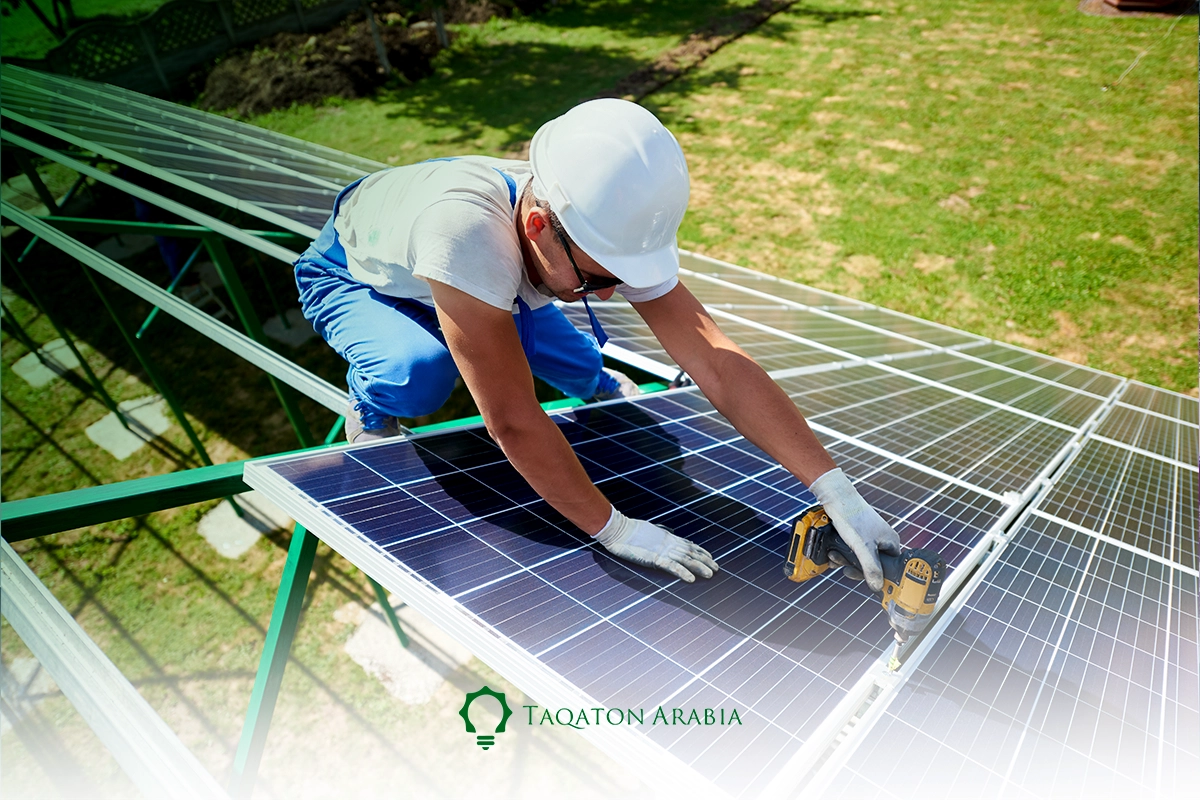
A solar plant can continue generating electricity even when its performance has declined. Monitoring helps compare actual generation with expected output after accounting for weather and operating conditions, making it easier to investigate persistent underperformance.
Preventive Maintenance (PM) involves planned checks of panels, wiring, mounting structures, and inverters. Predictive Maintenance (PdM) uses condition information, operating trends, and alarms to identify equipment showing signs of deterioration and to prioritize intervention.
Activities that may form part of an appropriate maintenance plan include:
- Monitoring production and reviewing inverter warnings or error logs.
- Scheduling safe cleaning based on soiling and manufacturer guidance.
- Checking accessible structures, wiring, and electrical protection through qualified personnel.
- Investigating suspected hotspots or faults with suitable inspection techniques.
- Conducting a Solar Power Plant Audit where actual performance remains below reasonable expectations.
These measures are particularly relevant at locations exposed to dust or demanding operating conditions. Service frequency should depend on equipment instructions, site conditions, and monitoring results rather than a fixed schedule applied to every project.
Other Services Provided by Taqaton Arabia:
Beyond Renewable Energy Solutions, Taqaton Arabia offers complementary engineering services that help facilities manage efficiency, electrical safety, and equipment reliability.
Electrical Engineering and Safety Assessments
These services include power quality and harmonics analysis, electrical testing, and safety assessments. An Arc Flash Study evaluates potential electrical arc hazards and supports appropriate safety decisions; it is a distinct engineering service rather than part of every solar installation.
Asset Reliability and Condition Monitoring
Thermal imaging, ultrasound inspection, and condition monitoring can help identify equipment deterioration and support targeted maintenance. Depending on the asset and the available data, these approaches can contribute to Predictive Maintenance (PdM) programs and more informed maintenance decisions.
Facility Energy Efficiency
Energy Audit services can examine HVAC, lighting, motors, and other energy-consuming systems. The resulting recommendations may reveal improvements that reduce consumption without requiring additional generation capacity.
The scope, methodology, and deliverables for each service should be agreed upon according to the facility’s requirements.
Order the service now from Taqat Arabia website
How to Get Started? Steps to Request a Service from Taqaton Arabia, the Leading Energy Solutions Company in Saudi Arabia
Begin by sharing basic project information so the engineering discussion starts with realistic requirements rather than a rough equipment estimate. Useful details include:
- Facility type and location: Factory, commercial building, hotel, residential development, or another application.
- Project objective: Solar electricity generation, water heating, an audit of an existing plant, or energy efficiency improvement.
- Consumption data: Available utility bills, operating hours, and load information.
- Site information: Roof or land area, photos, and drawings where available.
- Project priorities: Budget range, preferred timeline, operational continuity, and maintenance needs.
These details help establish whether a site visit, preliminary assessment, feasibility study, or more specialized service is the appropriate next step. Finding the Best Energy Solutions Company in Saudi Arabia for your facility means asking how each proposed solution addresses its actual operating needs.
Contact Taqaton Arabia for Integrated Energy Solutions in Saudi Arabia:
If you are planning a new solar installation, seeking to improve an existing plant, or evaluating energy consumption at your facility, contact Taqaton Arabia to discuss the engineering solution that fits your needs. We can help you identify technical priorities, assess generation and efficiency options, and define a project scope aligned with your operational goals.
Taqaton Arabia — +966561162097
Contact us today to enquire about solar PV systems, energy audits, and operation and maintenance solutions for your project in Saudi Arabia.
Order the service now from Taqat Arabia website
Our Clients:
Taqat Arabia is proud to be trusted by a select group of leading organizations across diverse sectors, including:
NEOM, Jeddah Airports Company (JEDCO), Heritage Sites Co., and Saudi Sdn Water & Energy Co. In the healthcare sector, it works with the Armed Forces Medical Services, Andalusia Hospitals, International Medical Center, and Jamjoom Pharma. In hospitality, its clients include leading global brands such as Marriott, Ramada, Park Inn by Radisson, Four Points by Sheraton, Mövenpick Hotel & Residences Riyadh, and Aloft Hotels. Its clients also include major groups and companies such as Landmark Group, Zahid Group, Bin Dawood, Halwani Bros, Tamgo, ARASCO, Baytoti, Al Adwani, Mohammad Al Habib, Arabian Japanese Membrane Company (AJMC), GCC Electrical Testing Laboratory, and SMI.





Order the service now from Taqat Arabia website
Frequently Asked Questions:
Does Taqaton Arabia Implement Grid-Tied and Off-Grid Systems?
Taqaton Arabia provides solar PV solutions. The availability and suitability of grid-tied or off-grid implementation for a particular project should be confirmed after reviewing the site, loads, electrical requirements, and agreed service scope.
Can You Rely Entirely on Solar Energy?
Some systems can be engineered to supply defined loads independently, but this requires careful analysis of nighttime consumption, low-sunlight periods, storage capacity, and backup provisions. A conventional grid-tied system alone does not provide automatic backup during a grid outage.
Do Solar Systems Require Maintenance?
Yes. Solar systems require performance monitoring, inspections, and cleaning when necessary, following manufacturer instructions and site-specific conditions. Routine maintenance helps identify deterioration before it causes significant energy losses or equipment failure.
Can Water Pumps Be Powered by Solar Energy?
Yes. Solar-powered pumping is technically possible when the system is designed for the required flow rate, pumping head, operating hours, and any necessary water or electrical storage. The suitability and supply scope must be evaluated for the individual project.
Is Solar Energy Suitable for Residential Homes?
Solar energy may be suitable for homes with safe installation space and consumption that justifies the investment. The decision depends on shading, location, electricity tariffs, connection requirements, equipment cost, and maintenance needs—not simply the size of the house.