
When your solar water heater produces lukewarm water, takes longer to heat up, or runs out of hot water earlier than expected, the problem may involve more than sunlight. Understanding the Causes of Poor Heating in Solar Water Heaters helps you distinguish normal weather-related changes from faults that require professional attention.
Taqaton Arabia supports solar water heating solutions and engineering-led maintenance planning for homes and facilities in Saudi Arabia, with a focus on system performance, energy efficiency, and equipment reliability.
The right response starts with a simple question: is the system collecting too little heat, circulating it poorly, or losing it after storage? This guide explains the symptoms, likely causes, safe checks, and maintenance decisions without treating every drop in water temperature as a mechanical failure.
Causes of Poor Heating in Solar Water Heaters: How Does a Solar Water Heater Work? Taqaton Arabia’s Guide
A solar thermal collector absorbs sunlight and converts it into heat, which is transferred either directly to the water or to a dedicated heat-transfer fluid. In indirect systems, the fluid passes through a heat exchanger that transfers the energy to the domestic water without the two circuits mixing, and an insulated tank then keeps the hot water until it is needed.
As Taqaton Arabia’s guide explains, several components work together in the heating process: the thermal collector, connecting pipes, the storage tank, insulation, and safety valves. A pump, sensors, a controller, and a backup heater may also be added, depending on the system design. Understanding the causes of poor heating in a solar water heater therefore requires identifying which part is not doing its job: capturing the energy, transferring it, storing it, or delivering the water to the user.
Is a solar water heater the same as a photovoltaic panel?
No. A photovoltaic panel produces electricity, while a solar thermal collector uses sunlight to heat a fluid. Troubleshooting a thermal heating fault is different from checking electricity production, even if both systems are installed on the same roof.
Causes of Poor Heating in Solar Water Heaters: Why Won’t the Water Heat Up, and What Are the Fixes with Taqaton Arabia?
Several faults can produce the same symptom. A useful diagnosis links the temperature complaint to evidence rather than immediately replacing the collector or heating element.
Insufficient sunlight reaching the collectors
Dust, leaves, new shade from nearby buildings, and unfavorable collector orientation can reduce heat absorption. Visual assessment of the collector location and appropriate professional cleaning may restore performance when soiling is the cause.
Poor circulation or trapped air
In pumped systems, a failed pump, blocked strainer, low flow, or trapped air can prevent heat from reaching the tank. Bleeding Air from the Circuit requires the correct procedure for the particular pressurized or indirect system; it is not a safe default DIY task.
Faulty temperature controls or backup heating
An inaccurate sensor or unsuitable controller setting may stop circulation too early, run it at the wrong time, or trigger frequent starts. Sensor and Pump Inspection checks whether measured temperatures match actual operation. If the model includes electric backup heating, its power supply and controls also need assessment by a qualified technician.
Scale, water leakage, or deteriorated insulation
Mineral deposits may restrict flow or heat transfer; Water Leakage may reduce pressure or system performance; and damaged insulation can allow collected heat to escape. The appropriate remedy depends on whether the problem is in the collector loop, storage tank, or domestic hot-water plumbing.
Order the service now from Taqat Arabia website
Poor Heating in Winter and on Cloudy Days: When Is It Normal, and When Should You Contact Taqaton Arabia?
A solar water heating system keeps collecting some heat whenever suitable sunlight is available, but shorter days, clouds, and low inlet water temperature can lower the final water temperature. The output is also affected by the collector’s tilt angle and area, the tank size, and the amount of water used.
The drop in performance is closer to normal behavior when it appears on low-sunshine days and then clearly improves on a sunny day with similar usage. However, if lukewarm water keeps coming out after enough hours of solar radiation, an error message appears, or the backup heating stops working, that is a reason to contact Taqaton Arabia for a technical assessment.
The backup heating element isn’t meant to run all the time without a review of the settings. Its job is to make up for a shortage of solar energy when needed, not to mask a persistent fault. And if you rely on it daily despite there being enough sunshine for your solar water heating system, it is better to bring the case to Taqaton Arabia rather than carry on like this.
Types of Solar Water Heater Systems (Thermosiphon vs. Active, Pressurized vs. Non-Pressurized) and Their Effect on Poor Heating:
These terms describe two different design characteristics, not four competing heater types.
Thermosiphon versus active circulation
A thermosiphon system relies on natural circulation: fluid heated in the collector rises toward a correctly positioned storage tank. Its performance can be affected by poor pipe layout, flow restrictions, and improper collector-to-tank positioning.
An active system uses a pump and usually temperature sensors and a controller. It introduces additional points to inspect, including electrical supply, pump performance, sensor placement, and control logic.
Pressurized versus non-pressurized systems
Pressurized systems are designed to work at specified operating pressures and rely on correctly selected protective components. Non-pressurized systems use a different water-supply and storage arrangement, with limitations that depend on their design. Neither should be modified to resemble the other.
Some indirect, double-circulation flat-plate systems also separate the heat-transfer medium from potable hot water. This distinction matters when investigating loss of loop pressure, air locks, and heat-exchanger performance. A technician should identify the actual configuration before testing or servicing it.
Why Does Water Temperature Drop Quickly? A Common Cause of Poor Heating in Solar Water Heaters:
Heating and heat retention are different functions. If water is hot late in the afternoon but cools unusually fast overnight, the collector may be working while the storage or distribution system loses heat.
Possible explanations include damaged tank insulation, uninsulated hot-water pipes, a leaking hot-water line, excess consumption, or unwanted reverse circulation through the collector loop. A faulty check valve or control strategy may contribute to nighttime heat loss in some designs. A thermostatic mixing valve can also change the temperature delivered at the tap even when stored water is adequately heated.
Compare water temperature at similar times and with similar usage before concluding that the tank is defective. The location of the temperature drop guides the technician toward the tank, pipework, valves, or circulation controls.
Order the service now from Taqat Arabia website
Why Is Water Leaking from the Pressure Relief Valve of a Solar Water Heater?
A pressure or temperature-and-pressure relief valve is a safety component, designed to discharge under specified conditions. Depending on the system and its expansion arrangement, occasional discharge during heating can occur. Continuous dripping, a strong discharge, or water release accompanied by abnormally high temperature is not something to ignore.
Potential causes include excessive supply pressure, a problem with thermal expansion control, overheating, sediment on the valve seat, or valve deterioration. The correct diagnosis requires pressure and temperature measurements using suitable equipment.
Never cap, block, or disable a relief-valve outlet, and do not manually operate a hot valve to troubleshoot it. Keep people away from the discharge and arrange professional inspection. Scalding water and pressurized components can cause serious injury.
Signs Your Solar Water Heater Needs Maintenance: When Does the Problem Start?
Maintenance should begin when a measurable change appears—not only when there is no hot water at all. Look for these signs:
- Longer heating times despite similar sunny conditions.
- Unexplained changes in daily hot-water availability.
- Visible moisture, corrosion, or damaged external pipe insulation.
- New pump noise, controller alerts, or repeated abnormal cycling.
- A collector surface that is visibly dirty or newly shaded.
- Persistent discharge from a safety outlet or an unusual smell near electrical components.
One observation rarely identifies the fault by itself. Keeping a simple log helps technicians distinguish an isolated weather event from a developing equipment issue. If there is a safety concern, stop using the affected equipment and seek qualified assistance.
Order the service now from Taqat Arabia website
What Can You Safely Check Before Requesting Maintenance?
You can gather useful information without opening electrical panels, climbing onto the roof, or releasing pressurized water.
- Check whether other taps show the same hot-water problem; a single outlet may have a local mixing or plumbing issue.
- Review the weather and recent hot-water usage, including unusually high demand.
- From a safe location, note visible shading, debris, leaks, and insulation damage.
- Read the controller display or fault indicator if it is accessible and intended for users.
- Consult the manufacturer’s user instructions for approved checks and backup-heating settings.
- Record when the problem began and whether it occurs mainly at night, in the morning, or throughout the day.
Do not attempt Bleeding Air from the Circuit, opening a pump housing, or resetting electrical protection repeatedly. These actions need system-specific technical procedures and proper isolation.
Also Read: Best Thermal Imaging Cameras
Common Mistakes That Damage Solar Water Heaters and Make Poor Heating Worse:
Quick fixes can turn a manageable performance problem into a costly or hazardous one. Common mistakes include:
- Washing a very hot collector with cold water or using abrasive cleaning products.
- Climbing onto roof-mounted equipment without suitable access and fall protection.
- Changing controller settings without recording the original configuration.
- Bypassing sensors, check valves, or safety devices to force continuous operation.
- Using an incompatible fluid in an indirect collector circuit.
- Ignoring small leaks, corroded fittings, or damaged thermal insulation.
- Assuming every system has the same maintenance procedure or tank protection components.
Use the manual for the installed model and engage a competent technician when a check involves hot fluid, pressure, electricity, or roof access.
Order the service now from Taqat Arabia website
How Does Taqaton Arabia Diagnose the Causes of Poor Heating in Solar Water Heaters, and Where Does the Inspection Start?
A systematic diagnosis begins with the operating complaint and the system design. Taqaton Arabia’s engineering approach emphasizes identifying abnormal conditions, evaluating evidence, and selecting actions that support reliable performance. The exact inspection scope depends on the installation and agreed service requirements.
Step 1: Review symptoms and system history
Relevant information includes heater model, tank capacity, collector type, recent repairs, hot-water demand, weather conditions, and when the temperature decline first appeared. This helps avoid replacing sound components.
Step 2: Inspect visible components and operating data
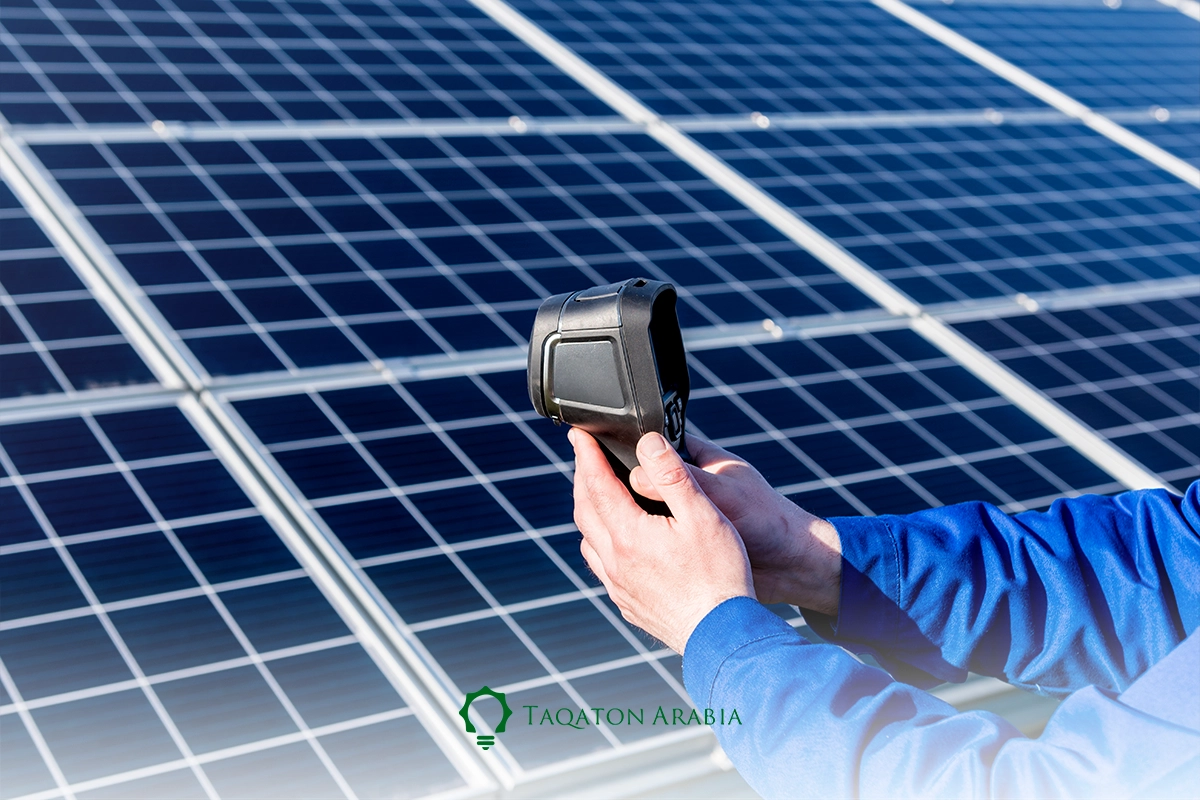
The assessment may cover collector shading and cleanliness, tank and pipe insulation, Water Leakage, controller indications, circulation rates, and accessible temperature readings. Thermal Inspection using Thermal Imaging and a calibrated Thermal Camera may help reveal abnormal temperature patterns or suspected insulation losses where the technique is suitable. Thermal images alone cannot prove the location or cause of every fault.
Step 3: Verify the suspected failure
A qualified specialist may perform targeted Sensor and Pump Inspection, flow or pressure checks, and electrical tests where applicable. Results are compared with the system manual and expected operating conditions before a corrective action is proposed.
What Does Solar Water Heater Maintenance by Taqaton Arabia Include, and What Are the Routine Maintenance Steps?
Solar Water Heater Maintenance is most effective when organized around the actual system rather than a generic checklist. Taqaton Arabia provides solar water heating solutions with installation and maintenance support, while the specific on-site work, replacement parts, and repair scope should be confirmed for each project.
A suitable maintenance plan can address:
- Collector condition, safe cleaning needs, mounting condition, and shading.
- Pipework, joints, insulation, visible corrosion, and leaks.
- Storage tank condition, temperature behavior, and protective components.
- Pump, controller, and sensor function where an active system is installed.
- Flow restrictions, scale indicators, and heat-transfer circuit condition.
- Safety-valve and expansion arrangements, inspected only by qualified personnel.
- Documentation of findings, corrective priorities, and follow-up measurements.
Preventive Maintenance uses planned inspections to reduce avoidable deterioration. Condition-Based Maintenance goes further by prioritizing work when actual readings or inspections indicate declining equipment condition. For larger monitored installations, trends in temperature, flow, or pump operation may also support Predictive Maintenance, provided adequate data and validated analysis are available.
Order the service now from Taqat Arabia website
Why Is Routine Maintenance Essential to Prevent Poor Heating in Solar Water Heaters, Especially in Riyadh and Jeddah?
Saudi operating conditions introduce specific maintenance considerations. In Riyadh, airborne dust and periodic sand events can soil exposed collectors. In Jeddah, coastal conditions make inspection for corrosion and weathered outdoor components particularly relevant. Both locations can also experience high ambient temperatures that place demands on exposed equipment and insulation.
Scheduled inspection helps reduce avoidable heat loss, identify damaged connections, and maintain consistent hot-water delivery. It also gives residential users and facilities managers an opportunity to review changing demand, backup-heating usage, and maintenance records.
For hotels, healthcare facilities, and commercial buildings, planning is especially important: a prolonged hot-water interruption may affect operations well beyond the heater itself. The appropriate service interval should follow the manufacturer’s instructions, site exposure, equipment age, and actual operating data—not a universal schedule imposed on every installation.
When Is Replacement Better Than Repair for a Solar Water Heater with Poor Heating?
Replacement becomes worth considering when the cost and risk of repeated repairs approach the value of restoring an aging or unsuitable system. It is not automatically the right response to low water temperature. Understanding the Causes of Poor Heating in Solar Water Heaters prevents unnecessary replacement when a targeted repair is sufficient.
A technical and commercial assessment should consider:
- Whether tank corrosion or structural damage can be repaired safely.
- Availability and compatibility of pumps, sensors, valves, or collector parts.
- Frequency and total cost of previous repairs.
- Current hot-water demand compared with original system capacity.
- Efficiency losses caused by obsolete design or inadequate insulation.
- Expected service life, warranty terms, and cost of a suitable replacement.
A serviceable sensor or pump fault may justify repair; a severely deteriorated tank or fundamentally undersized system may require a broader solution. The decision should be supported by a condition assessment and lifecycle costs.
Order the service now from Taqat Arabia website
When Should You Call a Specialist Technician? Solar Water Heater Maintenance Service by Taqaton Arabia
Ask for professional help when you observe sustained poor heating on clear days, recurring pump or controller faults, water leakage near electrical components, repeated safety-valve discharge, or a visible loss of pressure in a closed circuit. Unexplained overheating, steam, burning smells, or unsafe discharge demand urgent attention and avoidance of the equipment until it is assessed.
For a useful service enquiry, share your location, heater model if known, symptoms, controller error codes, and photos taken from a safe position. Taqaton Arabia can discuss the relevant solar water heating solution and available inspection or maintenance support, with the service scope agreed according to the installation.
Contact Taqaton Arabia for Solar Water Heater Solutions in Saudi Arabia:
If you are investigating the Causes of Poor Heating in Solar Water Heaters, or need to assess hot-water performance in a home or facility, contact us to discuss your system, operating conditions, and suitable engineering solutions. We approach energy efficiency and equipment reliability as part of long-term maintenance decisions—not simply as a one-time repair.
Taqaton Arabia — +966561162097
Contact us to enquire about solar water heating solutions and the available scope of inspection and maintenance support for your project.
Order the service now from Taqat Arabia website
Our Clients:
Taqat Arabia is proud to be trusted by a select group of leading organizations across diverse sectors, including:
NEOM, Jeddah Airports Company (JEDCO), Heritage Sites Co., and Saudi Sdn Water & Energy Co. In the healthcare sector, it works with the Armed Forces Medical Services, Andalusia Hospitals, International Medical Center, and Jamjoom Pharma. In hospitality, its clients include leading global brands such as Marriott, Ramada, Park Inn by Radisson, Four Points by Sheraton, Mövenpick Hotel & Residences Riyadh, and Aloft Hotels. Its clients also include major groups and companies such as Landmark Group, Zahid Group, Bin Dawood, Halwani Bros, Tamgo, ARASCO, Baytoti, Al Adwani, Mohammad Al Habib, Arabian Japanese Membrane Company (AJMC), GCC Electrical Testing Laboratory, and SMI.






Order the service now from Taqat Arabia website
Frequently Asked Questions:
What Is the Best Type of Solar Water Heater?
The best solar water heater depends on hot-water demand, installation conditions, and the needs of the property. Taqaton Arabia offers solar water heating solutions using flat-plate solar collectors, including indirect double-circulation systems that keep the heat-transfer fluid separate from domestic hot water. Available configurations feature electric backup heating and different tank capacities. Choosing the appropriate system and capacity helps deliver hot water more consistently while meeting the building’s actual requirements.
Do Solar Water Heaters Work at Night?
Collectors do not produce useful solar heat without sunlight. At night, hot water comes from heat retained in the insulated tank or from a backup heating source, if fitted.
How Often Does a Solar Water Heater Need Maintenance Each Year?
A professional review about once a year is a practical starting point, subject to the manufacturer’s instructions. Dusty sites, demanding commercial usage, or abnormal readings may justify more frequent inspection.
When Should the Magnesium Anode Rod in a Solar Water Heater Tank Be Replaced?
For tanks fitted with a sacrificial magnesium anode, replacement depends on wear, water quality, and the tank manufacturer’s service criteria. A technician should inspect it at the recommended interval; not every tank design uses the same protection system.
Why Does a Solar Water Heater Pump Keep Turning On and Off?
Cycling can be normal when the controller responds to changing collector and tank temperatures. Very frequent or unexpected cycling may indicate a sensor issue, unsuitable settings, intermittent electrical supply, or a circulation problem.
Can Solar Water Heaters Freeze?
Yes. Exposed water circuits may freeze when temperatures fall sufficiently, especially during unusual cold spells. Suitable freeze protection depends on the system design and may include indirect circulation with an appropriate heat-transfer fluid or other manufacturer-approved safeguards.
Can I Clean the Solar Water Heater Collector Myself, or Should I Request a Technician from Taqaton Arabia?
Only undertake cleaning when it can be done safely from an accessible position and in accordance with the manufacturer’s instructions. Roof access, fragile surfaces, electrical components, and hot collectors are reasons to request qualified assistance. Ask Taqaton Arabia about the inspection or cleaning support available for your installation.